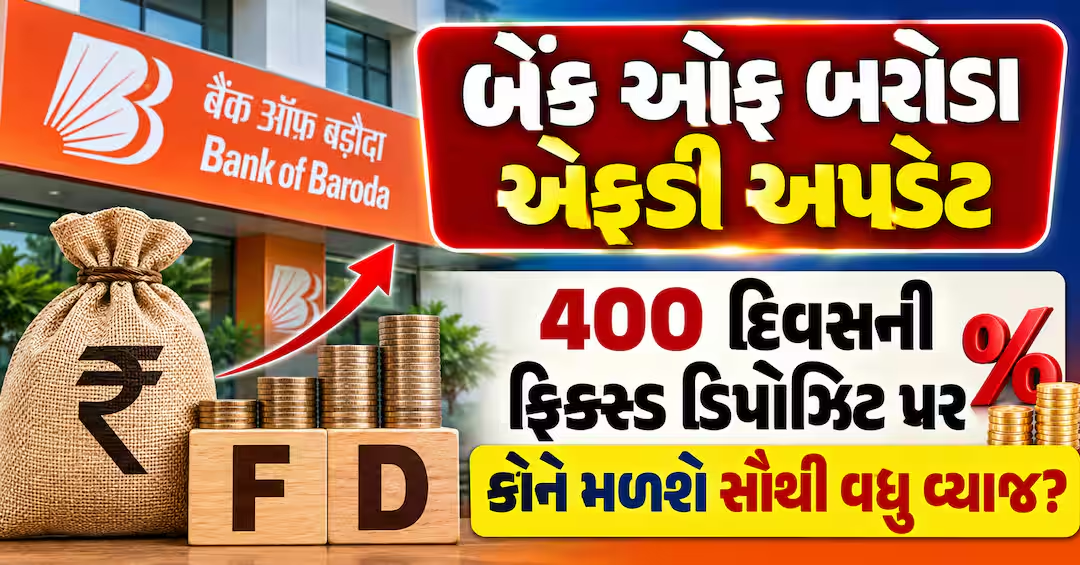
Bank of Baroda FD rates: બેંક ઓફ બરોડા (BoB) ભારતની એક અગ્રણી અને અત્યંત વિશ્વસનીય જાહેર ક્ષેત્રની બેંક છે. આ બેંક તેના તમામ ગ્રાહકો માટે વિવિધ ફિક્સ્ડ ડિપોઝિટ (FD) યોજનાઓ પર ખૂબ જ ઉત્તમ અને આકર્ષક વ્યાજ દરો પ્રદાન કરવા માટે જાણીતી છે. ગ્રાહકોની અલગ-અલગ જરૂરિયાતોને ધ્યાનમાં રાખીને બેંક ઓફ બરોડા વિવિધ મુદતવાળા FD ખાતાઓ પર 3.50% થી લઈને 7.35% સુધીના વ્યાજ દરો ઓફર કરી રહી છે. આ યોજનાઓમાં રોકાણ કરીને ગ્રાહકો તેમની બચત પર શાનદાર વળતર મેળવી શકે છે.
FD ખાતાની લઘુત્તમ અને મહત્તમ મુદત
🏦 બેંક ઓફ બરોડા (BoB) FD — લઘુત્તમ અને મહત્તમ મુદત
મુદ્દો
FD મુદત
🔹 મહત્તમ મુદત
7 દિવસ
🔹 લઘુત્તમ મુદત
10 વર્ષ
🔹 શોર્ટ ટર્મ FD
7 દિવસથી 12 મહિના કરતાં ઓછી
🔹 ટેક્સ સેવિંગ FD
5 વર્ષ
🔹 Liquid FD
12 મહિના થી 60 મહિના
📌 સામાન્ય BoB FD માટે 7 દિવસથી 10 વર્ષ સુધીની મુદત ઉપલબ્ધ છે.
વસની યોજના પર 6.75% વ્યાજ ચૂકવવામાં આવે છે.
સુપર સિનિયર સિટીઝન માટે: 80 વર્ષ અને તેથી વધુ ઉંમરના વૃદ્ધ ગ્રાહકોને આ 400 દિવસની સ્કીમ પર સૌથી વધુ એટલે કે 6.85% ના બમ્પર વ્યાજ દરનો લાભ મળે છે.
ખાસ નોંધવા જેવી બાબત એ છે કે ગ્રાહકો આ 400 દિવસની આકર્ષક યોજના હેઠળ વધુમાં વધુ 3 કરોડ રૂપિયા સુધીની મોટી રકમનું રોકાણ કરી શકે છે.
વ્યાજ દરોમાં સુધારો
બેંક ઓફ બરોડા દ્વારા તાજેતરમાં આ જ વર્ષે જૂન મહિનામાં તેની તમામ FD યોજનાઓના વ્યાજ દરોમાં નવો સુધારો કરવામાં આવ્યો હતો. ઉલ્લેખનીય છે કે ભારતની તમામ સરકારી અને ખાનગી બેંકો રિઝર્વ બેંક ઓફ ઈન્ડિયા (RBI) દ્વારા સમયાંતરે નિર્ધારિત કરવામાં આવતા રેપો રેટના આધારે જ પોતાની FD ના વ્યાજ દરોમાં વધારો કે ઘટાડો કરતી હોય છે.
🏦 Bank of Baroda (BoB) FD — સુધારેલા વ્યાજદર
₹3 કરોડથી ઓછી FD માટે ઉપલબ્ધ તાજેતરના દરો મુજબ:
1️⃣ 7 દિવસ–45 દિવસ 3.50% 4.00%
2️⃣ 46 દિવસ–180 દિવસ 5.00% 5.50%
3️⃣ 181 દિવસ–270 દિવસ 5.50% 6.00%
4️⃣ 1 વર્ષ 6.10% 6.60%
5️⃣ 3 વર્ષ–5 વર્ષ 6.30% 6.80%
📌 મહત્તમ સામાન્ય FD દર: ખાસ ડિપોઝિટ સ્કીમ હેઠળ 6.75% સુધી, જ્યારે વરિષ્ઠ નાગરિકોને 7.25% સુધી મળી શકે છે.
⚠️ FDના દરો સમયાંતરે બદલાઈ શકે છે; રોકાણ પહેલાં BoBની સત્તાવાર વેબસાઇટ પર વર્તમાન દર ચકાસવા.
Frequently Asked Questions
બેંક ઓફ બરોડા (BoB) વિવિધ FD યોજનાઓ પર કેટલું વ્યાજ આપે છે?
BoB તેના ગ્રાહકોને વિવિધ FD યોજનાઓ પર 3.50% થી લઈને 7.35% સુધીના આકર્ષક વ્યાજ દરો પ્રદાન કરે છે. આ દરો ગ્રાહકોની અલગ-અલગ જરૂરિયાતોને ધ્યાનમાં રાખીને હોય છે.
બેંક ઓફ બરોડામાં FD ખાતું કેટલી મુદત માટે ખોલાવી શકાય છે?
ગ્રાહકો BoB માં ઓછામાં ઓછા 7 દિવસની મુદત માટે FD ખાતું ખોલાવી શકે છે. લાંબા ગાળાના રોકાણ માટે, મહત્તમ 10 વર્ષ સુધીનું FD ખાતું ખોલાવવાની સુવિધા ઉપલબ્ધ છે.
બેંક ઓફ બરોડાની 400 દિવસની FD યોજના પર સામાન્ય નાગરિકોને કેટલું વ્યાજ મળે છે?
59 વર્ષ સુધીની ઉંમર ધરાવતા સામાન્ય ગ્રાહકોને 400 દિવસની FD પર 6.25% ના દરે વ્યાજ આપવામાં આવે છે. આ યોજના બચત પર સારું વળતર પૂરું પાડે છે.
વરિષ્ઠ અને સુપર સિનિયર નાગરિકોને 400 દિવસની FD પર કેટલું વ્યાજ મળે છે?
વરિષ્ઠ નાગરિકો (60+ વર્ષ) ને 6.75% અને સુપર સિનિયર નાગરિકો (80+ વર્ષ) ને સૌથી વધુ 6.85% ના દરે વ્યાજ મળે છે. તેમને સામાન્ય નાગરિકો કરતાં વધુ લાભ અપાય છે.
400 દિવસની FD યોજના હેઠળ મહત્તમ કેટલી રકમનું રોકાણ કરી શકાય છે?
ગ્રાહકો 400 દિવસની આકર્ષક યોજના હેઠળ વધુમાં વધુ 3 કરોડ રૂપિયા સુધીની મોટી રકમનું રોકાણ કરી શકે છે. આ એક ઉત્તમ રોકાણ વિકલ્પ છે.
AICPI July 2026, AICPI-IW July 2026, July 2026 AICPI Index, DA Hike 2026, DA Hike January 2027, DA 64 Percent, Dearness Allowance 2026, Central Government Employees DA, Government Employees Salary News, Pensioners DR Hike, AICPI Latest News, CPI IW July 2026, Labour Bureau AICPI, DA Calculation 2026, 8th Pay Commission, DA Hike Latest Update
જુલાઈ 2026 ના AICPI-IW ના નવા આંકડા જાહેર; ઇન્ડેક્સ 1.3 પોઈન્ટ વધીને 153.2 પર પહોંચ્યો, કેન્દ્રીય કર્મચારીઓ અને પેન્શનરોને 3 થી 4 ટકા DA વધારાની અપેક્ષા.
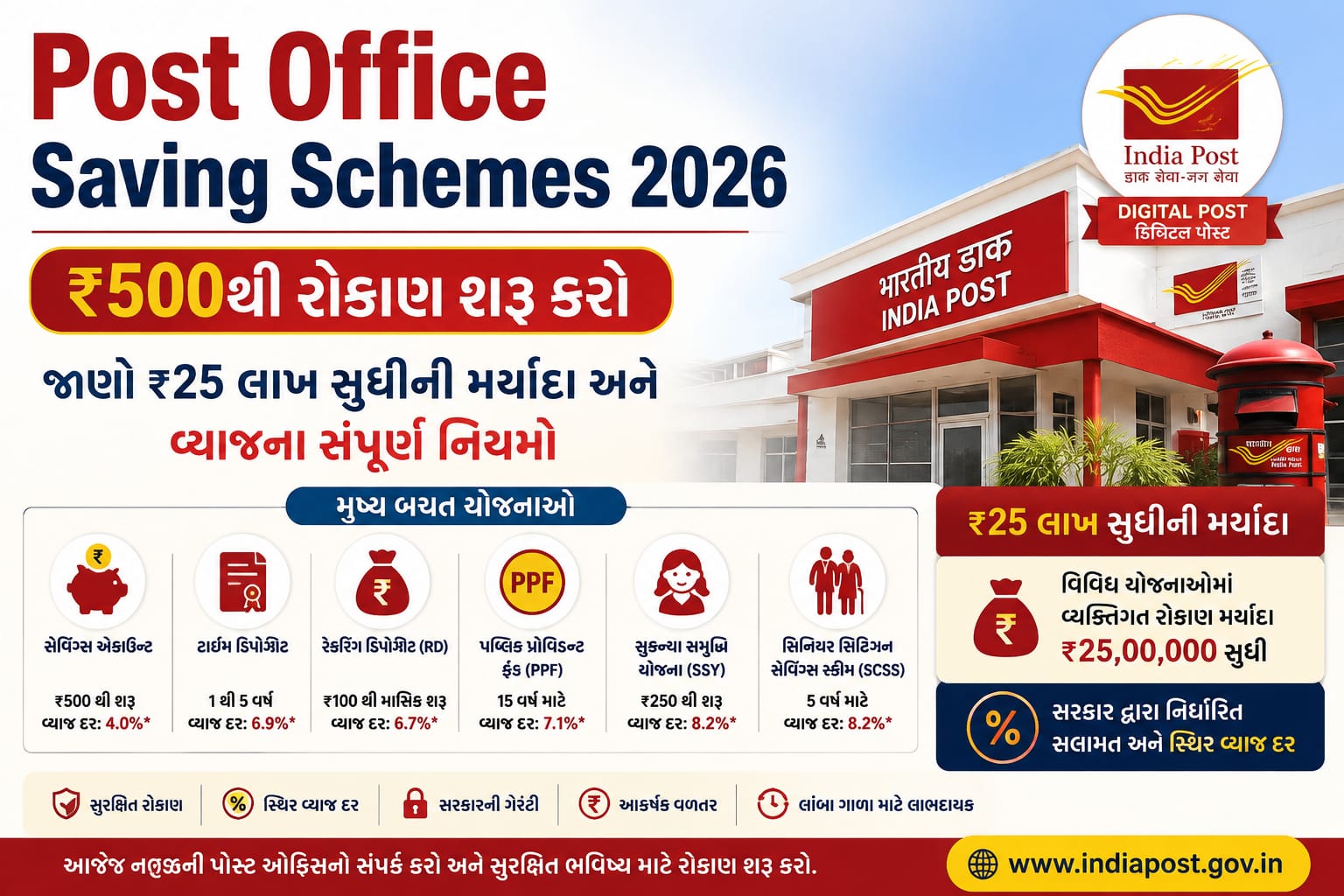
Post Office Saving Schemes 2026: ₹500થી શરૂ કરો રોકાણ, જાણો સંપૂર્ણ માહિતી
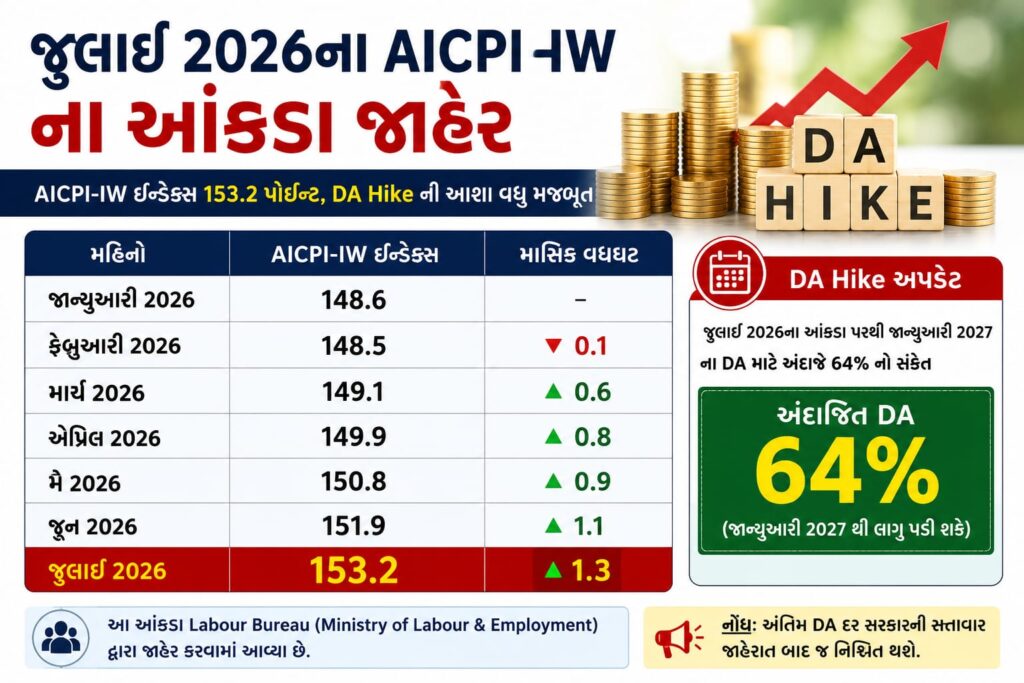
જુલાઈ 2026ના AICPI-IW (CPI-IW)ના આંકડા જાહેર થઈ ગયા છે. Labour Bureau મુજબ જુલાઈ 2026માં AICPI-IW ઈન્ડેક્સ 153.2 પોઈન્ટ રહ્યો, જે જૂનના 151.9 કરતાં 1.3 પોઈન્ટ વધુ છે.
આ આંકડાઓથી કેન્દ્રીય કર્મચારીઓ અને પેન્શનધારકોમાં DA/DR વધારાની આશા વધુ મજબૂત બની છે. ઉપલબ્ધ ગણતરી મુજબ જુલાઈના આંકડા જાન્યુઆરી 2027ના DA માટે અંદાજે 64% તરફ ઈશારો કરે છે; જોકે અંતિમ DA દર સરકારની સત્તાવાર જાહેરાત બાદ જ નિશ્ચિત થશે.
DA hike 2026: જો તમે કેન્દ્ર સરકારના કર્મચારી કે પેન્શનર છો, તો તમારા માટે એક અત્યંત ખુશીના સમાચાર આવી રહ્યા છે. તાજેતરમાં જ કેન્દ્રીય કર્મચારીઓ અને પેન્શનરો માટે મોંઘવારી ભથ્થા (DA) અને મોંઘવારી રાહત (DR) અંગે એક મોટું અપડેટ સામે આવ્યું છે. જુલાઈ 2026 માટેનો AICPI-IW ઇન્ડેક્સ જાહેર કરવામાં આવ્યો છે. આ નવા આંકડાઓમાં અગાઉના મહિનાની સરખામણીમાં 1.3 પોઈન્ટનો નોંધપાત્ર વધારો જોવા મળ્યો છે. આ ડેટા બહાર આવતાની સાથે જ કર્મચારીઓ આગામી DA સુધારા પર નજર માંડીને બેઠા છે. એવી પ્રબળ અપેક્ષા છે કે કેન્દ્ર સરકાર આગામી તહેવારોની મોસમ પહેલાં મોંઘવારી ભથ્થામાં વધારાની સત્તાવાર જાહેરાત કરી શકે છે, જે 1લી તારીખથી અમલમાં આવશે.
નવા ડેટા અનુસાર, જુલાઈ 2026 માં AICPI-IW ઇન્ડેક્સ 1.3 પોઈન્ટઉછળીને 153.2 ની સપાટીએ પહોંચી ગયો છે. આ સાથે જ, જુલાઈ 2026 માં છૂટક ફુગાવાનો વાર્ષિક દર પણ વધીને 4.57% નોંધાયો છે, જે બરાબર એક વર્ષ અગાઉ એટલે કે જુલાઈ 2025 માં માત્ર 2.66% હતો. ફુગાવાના આ વધતા આંકડાઓને પગલે કર્મચારીઓને પૂરી આશા છે કે સરકાર આગામી મહિનાઓમાં મોંઘવારી ભથ્થામાં ચોક્કસ વધારો કરશે. નોંધનીય છે કે આ ડેટા દેશના 88 મુખ્ય ઔદ્યોગિક કેન્દ્રોના 317 અલગ-અલગ બજારોમાંથી એકત્રિત કરવામાં આવેલા છૂટક ભાવોના આધારે તૈયાર કરવામાં આવ્યો છે.
AICPI-IW 2026નું કોષ્ટક
મહિનો
AICPI-IW ઈન્ડેક્સ
જાન્યુઆરી 2026
148.6
ફેબ્રુઆરી 2026
148.5
માર્ચ 2026
149.1
એપ્રિલ 2026
149.9
મે 2026
150.8
જૂન 2026
151.9
જુલાઈ 2026
153.2
જુલાઈ 2026માં AICPI-IW 153.2 થયો, જે જૂનના 151.9 કરતાં 1.3 પોઈન્ટ વધારે છે. આ સત્તાવાર Labour Bureauના આંકડા છે.
📢 DA Hike Update: જુલાઈનો આંકડો હવે જાહેર થતાં જાન્યુઆરી 2027ના DAની ગણતરી માટે મહત્વપૂર્ણ શરૂઆત થઈ છે; જોકે અંતિમ DA ટકાવારી માટે આગામી મહિનાના AICPI-IW આંકડા પણ જરૂરી રહેશે.
AICPI-IW ઇન્ડેક્સ શું છે અને તેનું વલણ
AICPI-IW એટલે કે ‘ઓલ ઇન્ડિયા કન્ઝ્યુમર પ્રાઇસ ઇન્ડેક્સ ફોર ઇન્ડસ્ટ્રિયલ વર્કર્સ’. આ ઇન્ડેક્સ દર મહિને બહાર પાડવામાં આવે છે અને તે ઔદ્યોગિક કામદારો દ્વારા રોજિંદા જીવનમાં ઉપયોગમાં લેવાતા માલસામાન અને સેવાઓના ભાવમાં થતા ફેરફારોને માપે છે. વર્ષ 2026 ના શરૂઆતના મહિનાઓથી જ આ સૂચકાંકમાં સતત વધારો જોવા મળી રહ્યો છે. આંકડાકીય માહિતી પર નજર કરીએ તો, માર્ચ 2026 માં આ ઇન્ડેક્સ 149.1 હતો. ત્યારબાદ એપ્રિલ 2026 માં તે 149.9 થયો, મે મહિનામાં 150.8, જૂનમાં 151.9 અને હવે જુલાઈ 2026 માં તે વધીને 153.2 પર પહોંચી ગયો છે.
કર્મચારીઓ માટે આંકડાઓનું મહત્ત્વ અને સંભવિત વધારો
કેન્દ્રીય કર્મચારીઓ માટે આ ઇન્ડેક્સ ખૂબ જ નિર્ણાયક ભૂમિકા ભજવે છે, કારણ કે તેના આધારે જ તેમના મોંઘવારી ભથ્થા (DA) અને પેન્શનરોના મોંઘવારી રાહત (DR) ની ગણતરી થાય છે. 7મા પગાર પંચના નિયમો અનુસાર, વર્ષમાં બે વાર DA સુધારવામાં આવે છે, જે 12 મહિનાના સરેરાશ AICPI-IW આંકડા પર આધારિત હોય છે. સામાન્ય રીતે સરકાર માર્ચ અને ઓક્ટોબર મહિનાની આસપાસ આ વધારાની જાહેરાત કરતી હોય છે.
હાલના જુલાઈ 2026 ના નવા AICPI-IW ડેટા અને ફુગાવાના વલણને જોતાં, આર્થિક નિષ્ણાતો અને કર્મચારી સંગઠનો આ વખતે મોંઘવારી ભથ્થામાં આશરે 3% થી 4% ના વધારાની અપેક્ષા રાખી રહ્યા છે. જોકે, આ હાલમાં માત્ર એક અંદાજ છે. મોંઘવારી ભથ્થાનો અંતિમ અને વાસ્તવિક વધારો બાકી રહેલા મહિનાઓના AICPI-IW ડેટા અને કેન્દ્ર સરકારની કેબિનેટની અંતિમ મંજૂરી પછી જ સત્તાવાર રીતે નક્કી કરવામાં આવશે.
કેન્દ્રીય કર્મચારીઓ અને પેન્શનરો માટે DA વિશે શું નવું અપડેટ છે?
જુલાઈ 2026 માટેનો AICPI-IW ઇન્ડેક્સ 1.3 પોઈન્ટ વધીને 153.2 પર પહોંચ્યો છે. આ નવા આંકડાઓ DA વધારાની પ્રબળ અપેક્ષા જગાવે છે.
AICPI-IW ઇન્ડેક્સ શું છે?
AICPI-IW એટલે ‘ઓલ ઇન્ડિયા કન્ઝ્યુમર પ્રાઇસ ઇન્ડેક્સ ફોર ઇન્ડસ્ટ્રિયલ વર્કર્સ’. આ ઇન્ડેક્સ ઔદ્યોગિક કામદારો દ્વારા ઉપયોગમાં લેવાતા માલસામાન અને સેવાઓના ભાવ ફેરફારોને માપે છે.
Post Office Saving Schemes 2026: પોસ્ટ ઓફિસની PPF, RD, NSC, KVP, SCSS, MIS અને Sukanya Samriddhi જેવી યોજનાઓના લેટેસ્ટ વ્યાજદર, રોકાણ મર્યાદા, મેચ્યોરિટી અને ફાયદા જાણો.
Focus Keyword
Post Office Saving Schemes 2026
SEO Keywords
Post Office Saving Schemes, Post Office Scheme 2026, Post Office Interest Rate 2026, PPF Interest Rate, NSC Interest Rate, KVP Scheme, Post Office RD, SCSS, Sukanya Samriddhi Yojana, Post Office MIS, Post Office Investment Scheme, પોસ્ટ ઓફિસ સ્કીમ 2026, પોસ્ટ ઓફિસ વ્યાજદર
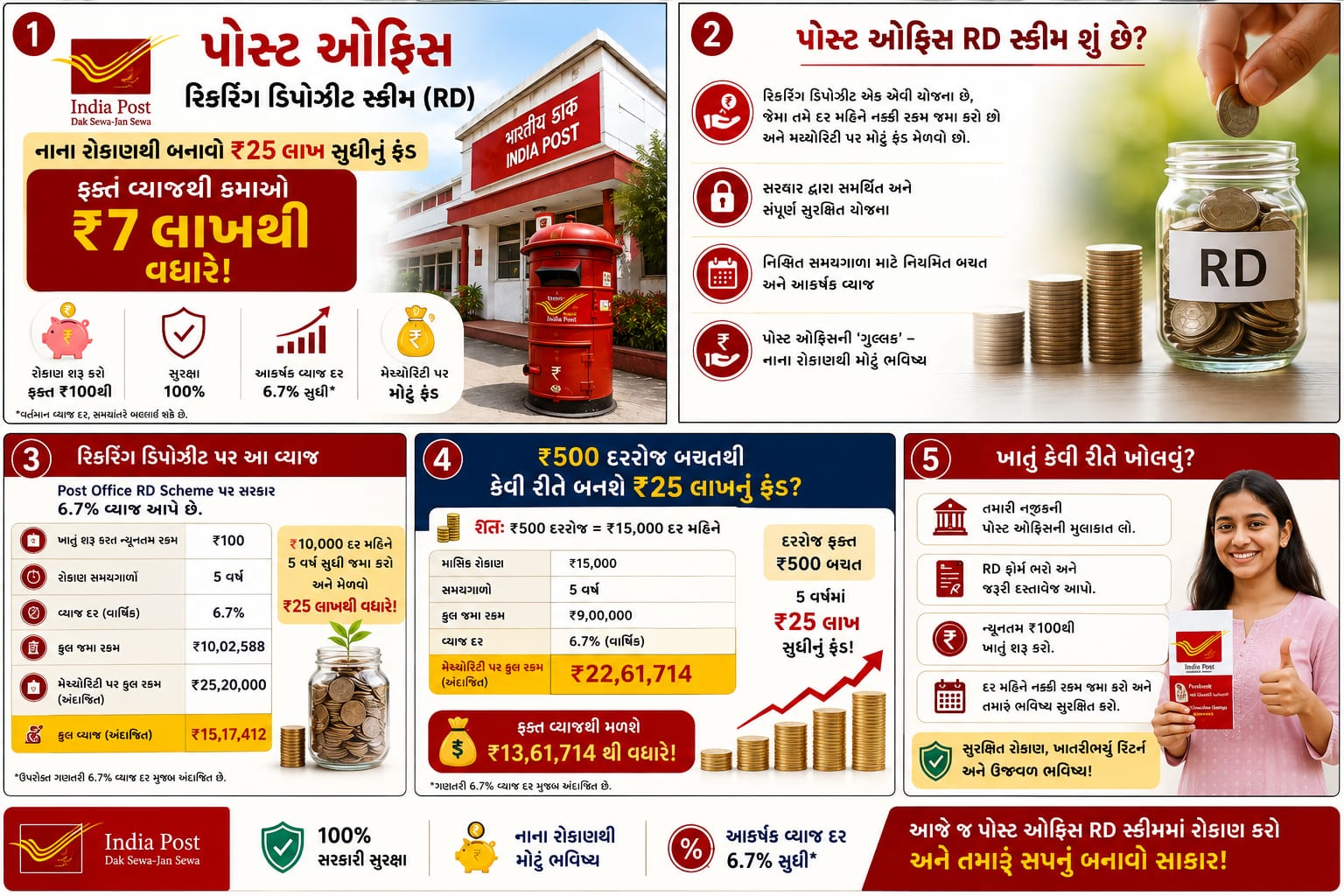
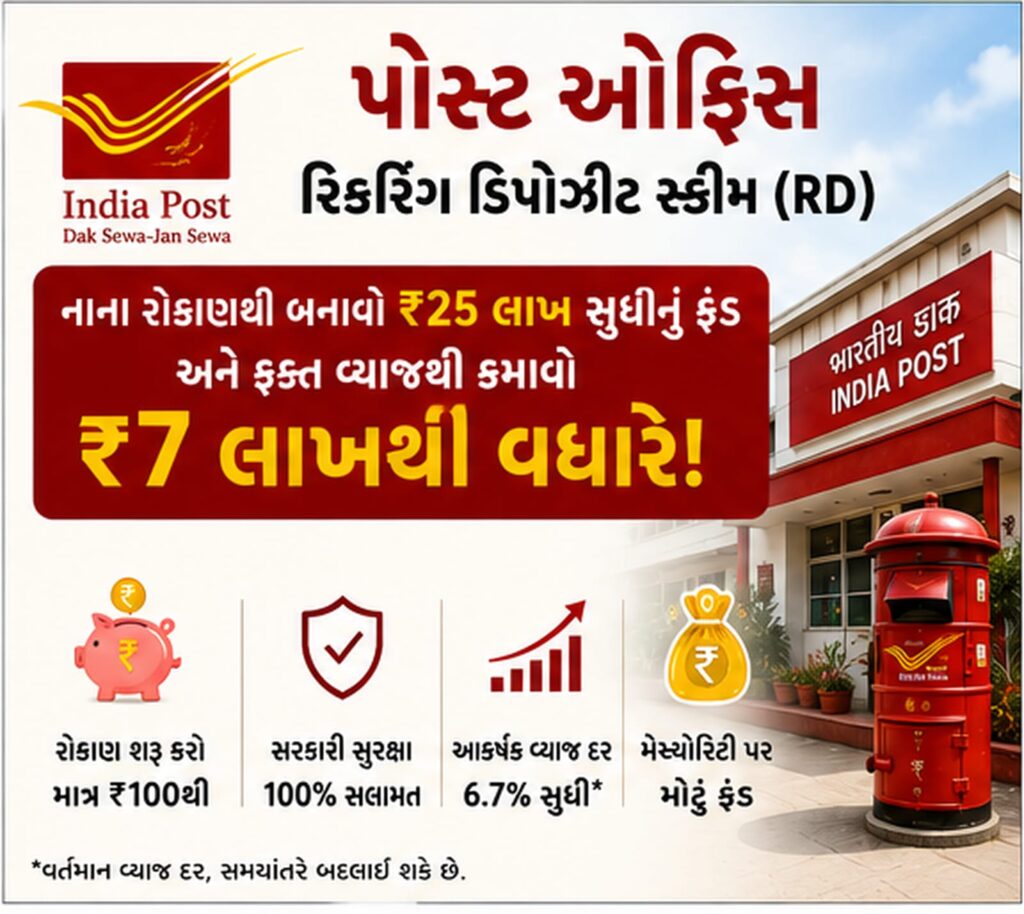
Post Office Saving Schemes:રૂપિયા 500થી 25 લાખ ફંડ; વ્યાજથી રૂપિયા 7 લાખની થશે કમાણી, પોસ્ટ ઓફિસની આ શાનદાર સ્કીમ વિશે જાણો Post Office Saving Schemes:પોસ્ટ ઓફિસ દ્વારા તમામ સરાકરી યોજનાનું સંચાલન કરવામાં આવી રહ્યું છે, જે સુરક્ષિત રોકાણ અને મોટા રિટર્ન આપવાની બાબતમાં વિશેષ લોકપ્રિય થઈ રહ્યા છે.
prefferd source google fund-from-rs-500-to-25-lakhs-earn-rs-7-lakhs-from-interest-know-about-this-great-scheme-of-the-post-office
Post Office Saving Schemes 2026: ₹500થી શરૂ કરો રોકાણ, જાણો સંપૂર્ણ માહિતી
Post Office Saving Schemes:પોસ્ટ ઓફિસ દ્વારા તમામ સરાકરી યોજનાનું સંચાલન કરવામાં આવી રહ્યું છે, જે સુરક્ષિત રોકાણ અને મોટા રિટર્ન આપવાની બાબતમાં વિશેષ લોકપ્રિય થઈ રહ્યા છે. સરકાર તરફથી તેમાં રોકાણ પર બમ્પર વ્યાજ આપવામાં આવી રહ્યું છે, જે રોકાણકારોની નાના-નાના ફંડ બનાવવામાં મદદરૂપ સાબિત થઈ છે.
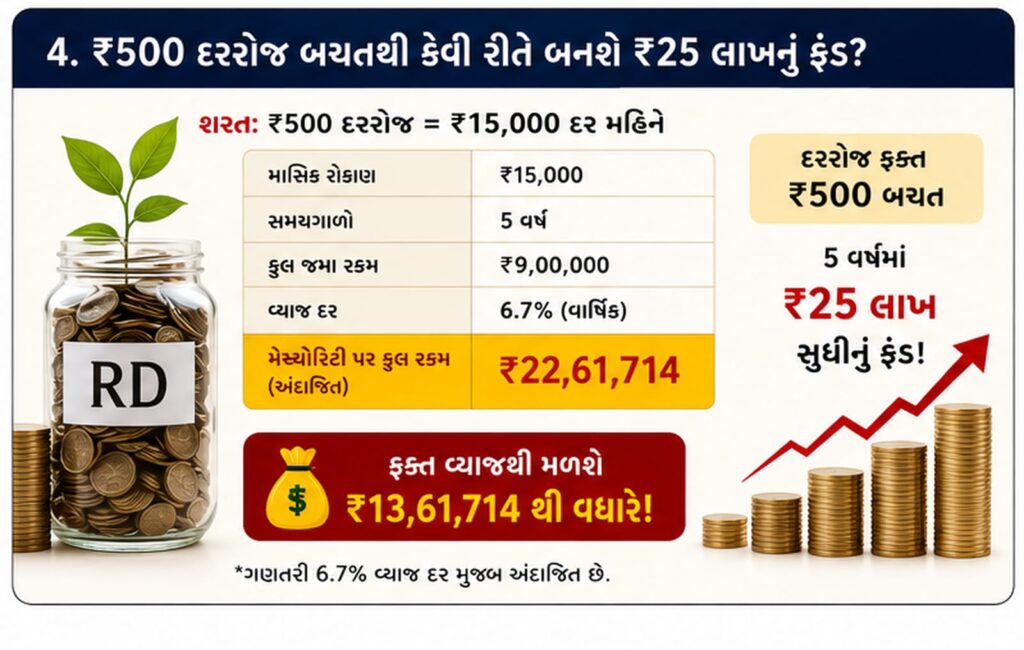
આ સંજોગોમાં એક સ્કીમ છે, પોસ્ટ ઓફિસ રિકરિંગ ડિપોઝીટ સ્કીમ(Post Office Recurring Deposit Scheme), જેમાં દરરોજ રૂપિયા 500 બચત મારફતે રૂપિયા 25 લાખ ફંડ જમા થાય છે અને તેમાં ફક્ત વ્યાજથી રૂપિયા 7 લાખથી વધારે કમાણી થઈ શકે છે. ચાલો જાણીએ તેનું સંપૂર્ણ ગણિત.
આ દરો 1 જુલાઈ 2026થી 30 સપ્ટેમ્બર 2026 માટે લાગુ છે.
આજથી સમયમાં દરેક કોઈ પોતાની કમાણીથી કોઈને કોઈ બચત(Saving) કરીને તેને એવી જગ્યાએ રોકાણ કરવાનું પ્લાનિંગ કરે છે, જ્યાં તેના પૈસા સુરક્ષિત તો રહે તે ઉપરાંત આ રોકાણ પર આ રિટર્ન પણ ઊંચુ રહે છે.આ રીતે જોતા પોસ્ટ ઓફિસ દ્વારા સંચાલિત કરવામાં આવી રહેલ તમામ સરકારી બચત યોજના વ્યાપક લોકપ્રિય છે.
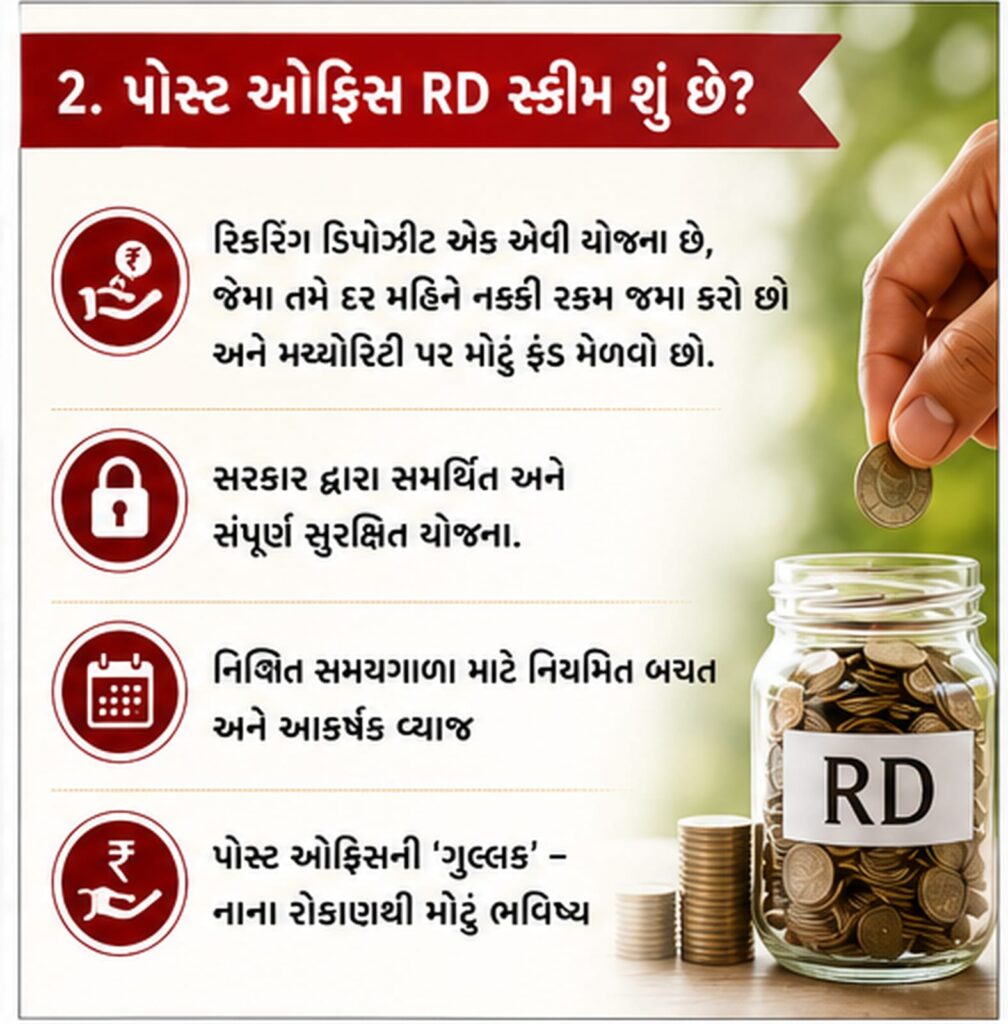
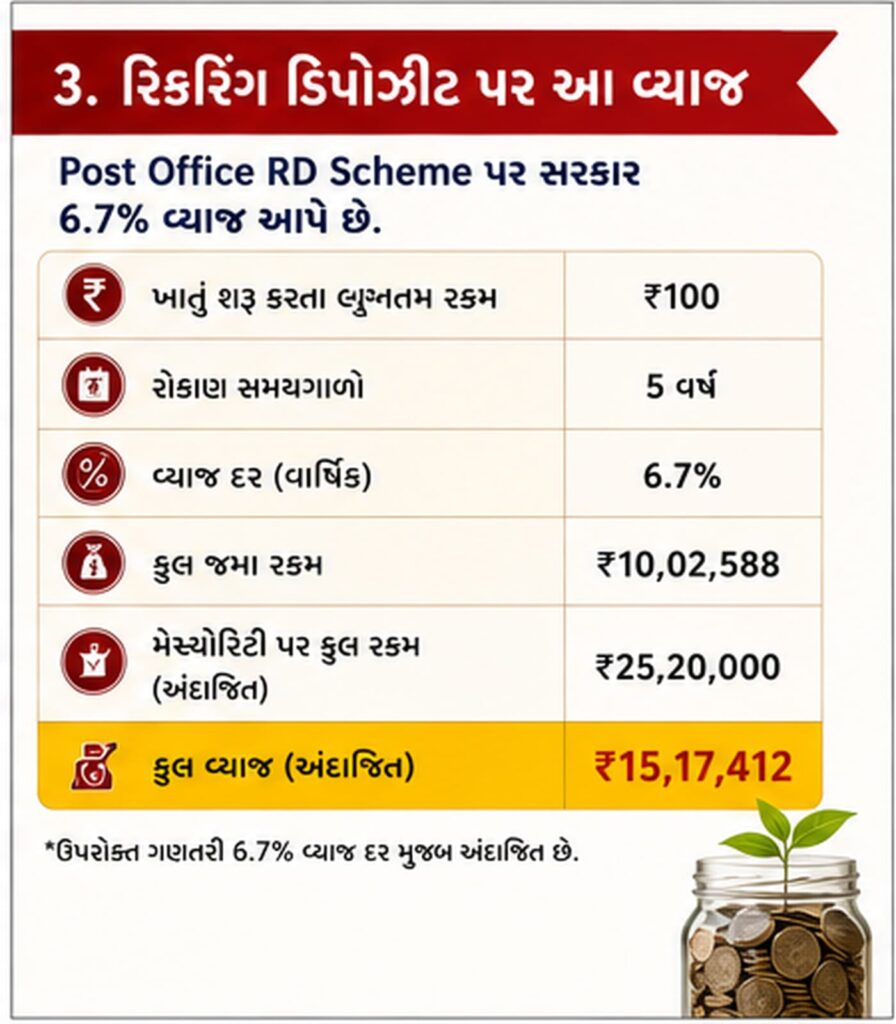
જે પ્રમાણે Post Office Scheme પર સરકાર સુરક્ષા ઉપરાંત વ્યાપક વ્યાજની ઓફર કરે છે તો Post Office RD Schemeમાં પણ 6.7 ટકા વ્યાજ આપે છે. આ સ્કીમને પોસ્ટ ઓફિસની Gullak પણ કહેવામાં આવે છે, જેમાં કોઈ પણ નાના-નાના રોકાણ તમને મોટા ફંડ એકત્રિત કરે છે. વિશેષ વાત છે કે ખાસ વ્યૂહરચનાથી કરવામાં આવેલ રોકાણ મારફતે વ્યાજથી તાબડતો કમાણી કરી શકાય છે.
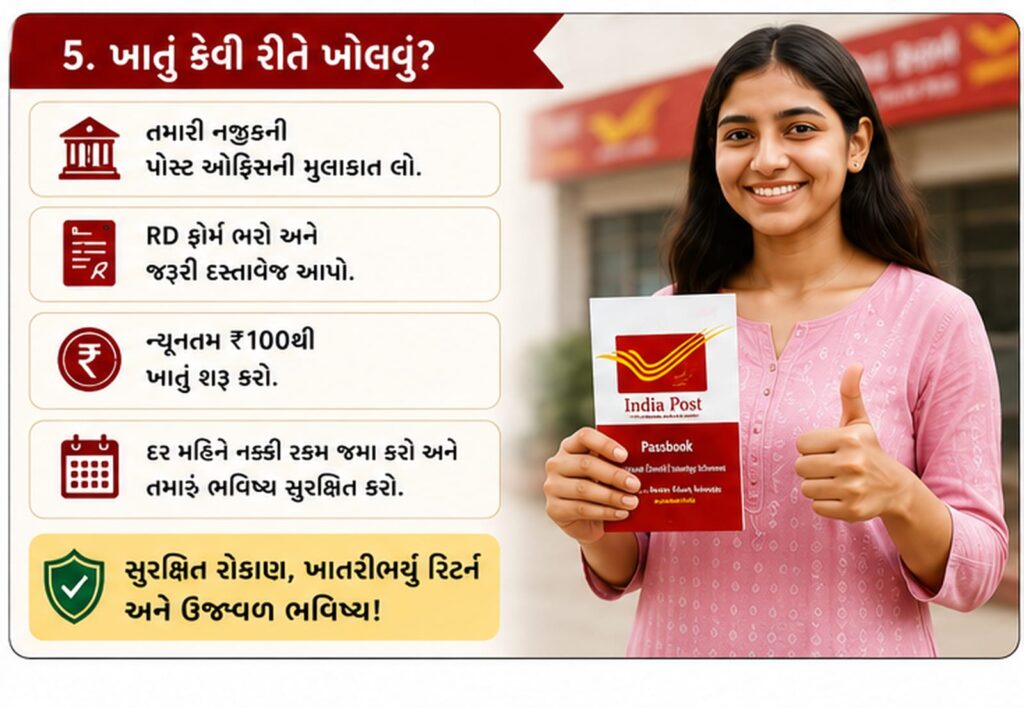
ફક્ત રૂપિયા 100થી શરૂ કરી શકાય છે, અકાઉન્ટ પોસ્ટ ઓફિસની ટોપ સ્મોલ સેવિંગ સ્કીમમાં સામેલ Post Office RD Schemeમાં તમે કોઈ પણ રોકડ પોસ્ટ ઓફિસ મારફતે સરળતાથી અકાઉન્ટ ખોલી શકો છો. તેમાં ફક્ત રૂપિયા 100ની શરૂઆતી રોકાણ ખાતાને શરૂ કરી શકાય છે.
Post Office Saving Schemes 2026: પોસ્ટ ઓફિસની PPF, RD, NSC, KVP, SCSS, MIS અને Sukanya Samriddhi જેવી યોજનાઓના લેટેસ્ટ વ્યાજદર, રોકાણ મર્યાદા, મેચ્યોરિટી અને ફાયદા જાણો.
Focus Keyword
Post Office Saving Schemes 2026
SEO Keywords
Post Office Saving Schemes, Post Office Scheme 2026, Post Office Interest Rate 2026, PPF Interest Rate, NSC Interest Rate, KVP Scheme, Post Office RD, SCSS, Sukanya Samriddhi Yojana, Post Office MIS, Post Office Investment Scheme, પોસ્ટ ઓફિસ સ્કીમ 2026, પોસ્ટ ઓફિસ વ્યાજદર
Post Office Saving Schemes 2026: ₹500થી શરૂ કરો રોકાણ, જાણો સંપૂર્ણ માહિતી
આજના સમયમાં સુરક્ષિત રોકાણ સાથે સારું વળતર મેળવવા માટે લોકો સરકારી બચત યોજનાઓ તરફ વધુ ધ્યાન આપી રહ્યા છે. ખાસ કરીને પોસ્ટ ઓફિસની Small Savings Schemes સામાન્ય રોકાણકારો, વરિષ્ઠ નાગરિકો, મહિલાઓ અને બાળકોના ભવિષ્ય માટે ઉપયોગી બની શકે છે.
પોસ્ટ ઓફિસમાં PPF, Recurring Deposit, Time Deposit, National Savings Certificate, Kisan Vikas Patra, Senior Citizen Savings Scheme, Monthly Income Scheme અને Sukanya Samriddhi Account જેવી વિવિધ યોજનાઓ ઉપલબ્ધ છે.
કેન્દ્ર સરકારના Department of Economic Affairs દ્વારા જુલાઈથી સપ્ટેમ્બર 2026ના ત્રિમાસિક ગાળા માટે Small Savingsના વ્યાજદર યથાવત રાખવામાં આવ્યા છે.
જે લોકો દર મહિને થોડા પૈસા બચાવવા માંગે છે તેમના માટે 5 વર્ષનું Post Office RD ઉપયોગી વિકલ્પ બની શકે છે.
હાલ 5-Year RD પર 6.7% વાર્ષિક વ્યાજદર છે.
દર મહિને નક્કી રકમ જમા કરાવવાથી નિયમિત બચતની ટેવ વિકસે છે અને 5 વર્ષ બાદ જમા રકમ સાથે વ્યાજ મળે છે.
National Savings Certificate – 7.7% વ્યાજ
NSC પાંચ વર્ષની અવધિ ધરાવતી લોકપ્રિય બચત યોજના છે.
હાલ NSC પર 7.7% વાર્ષિક વ્યાજદર છે.
આ યોજના ખાસ કરીને એવા રોકાણકારો માટે ઉપયોગી બની શકે છે જેઓ નિશ્ચિત અવધિ માટે સરકારી બચત યોજનામાં રોકાણ કરવા માંગે છે.
Kisan Vikas Patra – પૈસા બમણા કરવાની યોજના
Kisan Vikas Patra (KVP) પર હાલમાં 7.5% વ્યાજદર છે. વર્તમાન દર મુજબ રોકાણની રકમ 115 મહિનામાં એટલે કે લગભગ 9 વર્ષ 7 મહિનામાં બમણી થવાની જોગવાઈ છે.
ઉદાહરણ તરીકે, ₹1 લાખનું રોકાણ નિર્ધારિત શરતો મુજબ મેચ્યોરિટી પર આશરે ₹2 લાખ થઈ શકે છે.
Senior Citizen Savings Scheme – 8.2% વ્યાજ
વરિષ્ઠ નાગરિકો માટે SCSS ખૂબ મહત્વપૂર્ણ યોજના છે.
હાલ વ્યાજદર 8.2% પ્રતિ વર્ષ છે અને વ્યાજ સામાન્ય રીતે ત્રિમાસિક ધોરણે ચૂકવાય છે.
India Postની માહિતી અનુસાર SCSSમાં મહત્તમ રોકાણ મર્યાદા ₹30 લાખ સુધી છે.
આથી “₹25 લાખ સુધીનું રોકાણ” જેવી વાત SCSSના સંદર્ભમાં સમજાય છે, પરંતુ દરેક પોસ્ટ ઓફિસ યોજનામાં ₹25 લાખની મર્યાદા નથી.
Post Office Monthly Income Account – દર મહિને આવક
જે લોકોને નિયમિત આવકની જરૂરિયાત હોય તેમના માટે Monthly Income Account Scheme (MIS) ઉપયોગી બની શકે છે.
હાલ તેનો વ્યાજદર 7.4% છે અને વ્યાજ માસિક ચૂકવાય છે.
India Postની માહિતી મુજબ MISમાં વ્યક્તિગત ખાતા માટે મર્યાદા ₹9 લાખ અને સંયુક્ત ખાતા માટે ₹15 લાખ સુધી છે.
Sukanya Samriddhi Account – દીકરીના ભવિષ્ય માટે
દીકરીના શિક્ષણ અને ભવિષ્ય માટે Sukanya Samriddhi Account લોકપ્રિય સરકારી બચત યોજના છે.
હાલ તેનો વ્યાજદર 8.2% છે.
India Postની માહિતી અનુસાર ખાતામાં ઓછામાં ઓછા ₹250થી શરૂઆત કરી શકાય છે અને નાણાકીય વર્ષમાં મહત્તમ ₹1.50 લાખ જમા કરી શકાય છે. મેચ્યોરિટી અવધિ 21 વર્ષ છે.
₹500થી ₹25 લાખનું ફંડ કેવી રીતે?
અહીં એક બાબત ખાસ સમજવી જરૂરી છે.
₹500થી રોકાણ શરૂ કરી શકાય છે તેનો અર્થ એ નથી કે માત્ર ₹500નું રોકાણ કરીને ₹25 લાખ મળશે. ₹25 લાખનું ફંડ બનાવવા માટે રોકાણની રકમ, સમયગાળો, વ્યાજદર અને વ્યાજના ચક્રવૃદ્ધિ નિયમો મહત્વપૂર્ણ છે.
ઉદાહરણ તરીકે PPFમાં વાર્ષિક મહત્તમ ₹1.50 લાખ સુધી રોકાણ કરી શકાય છે અને વર્તમાન વ્યાજદર 7.1% છે.
તેથી સોશિયલ મીડિયા પર જોવા મળતા “₹500 ભરો અને ₹25 લાખ મેળવો” જેવા દાવા પર સીધો વિશ્વાસ કરતા પહેલાં સંબંધિત યોજનાના સત્તાવાર નિયમો તપાસવા જરૂરી છે.
સપ્ટેમ્બરની આ 6 તારીખ નોટ કરે કર્મચારી-પેન્શનર્સ, પગાર-પેન્શન પર મળશે ગુડ ન્યૂઝ
₹7 લાખ વ્યાજની વાત કેટલી સાચી?
₹7 લાખનું વ્યાજ કોઈ એક નિશ્ચિત પોસ્ટ ઓફિસ સ્કીમમાં માત્ર ₹500ના રોકાણથી મળતું નથી.
વ્યાજની કુલ કમાણી ગણવા માટે:
મૂળ રોકાણ + રોકાણની અવધિ + લાગુ વ્યાજદર + જમા કરવાની પદ્ધતિ + કમ્પાઉન્ડિંગ નિયમો
આ તમામ બાબતો ધ્યાનમાં લેવી પડે છે.
એટલે “₹500 રોકાણથી ₹7 લાખ વ્યાજ” એવો દાવો સામાન્ય રીતે ભ્રામક બની શકે છે.
પોસ્ટ ઓફિસમાં રોકાણ કરતા પહેલાં આ બાબતો ધ્યાનમાં રાખો
✅ યોજનાનો વર્તમાન વ્યાજદર તપાસો
✅ મેચ્યોરિટી સમયગાળો સમજો
✅ મહત્તમ રોકાણ મર્યાદા તપાસો
✅ સમય પહેલાં પૈસા ઉપાડવાના નિયમો જાણો
✅ ટેક્સના નિયમો સમજો
✅ તમારા નાણાકીય લક્ષ્ય પ્રમાણે યોજના પસંદ કરો
✅ રોકાણ પહેલાં સત્તાવાર India Post/સરકારી માહિતી તપાસો
નિષ્કર્ષ
Post Office Saving Schemes સુરક્ષિત અને નિયમિત બચત માટે ઘણા લોકોમાં લોકપ્રિય છે. હાલમાં જુલાઈ–સપ્ટેમ્બર 2026 માટે Small Savings Schemesના વ્યાજદર યથાવત છે. તેમાં PPF પર 7.1%, NSC પર 7.7%, KVP પર 7.5%, MIS પર 7.4%, SCSS અને Sukanya Samriddhi પર 8.2% વ્યાજદર છે.
પરંતુ ₹500થી સીધું ₹25 લાખ અથવા ₹7 લાખ વ્યાજ મળવાની વાતને કોઈ ચોક્કસ યોજના સાથે જોડતા પહેલાં ગણતરી અને સત્તાવાર નિયમો તપાસવા જરૂરી છે.
નોંધ: વ્યાજદર સરકાર દ્વારા સમયાંતરે બદલાઈ શકે છે. રોકાણનો નિર્ણય લેતા પહેલાં તાજી સત્તાવાર માહિતી તપાસવી.
FAQ
Q1. પોસ્ટ ઓફિસમાં સૌથી ઓછા કેટલા રૂપિયાથી રોકાણ શરૂ કરી શકાય? કેટલીક યોજનાઓમાં ₹500થી શરૂઆત કરી શકાય છે, જ્યારે યોજનાના આધારે લઘુત્તમ રકમ અલગ હોય છે. PPFમાં લઘુત્તમ ₹500 છે.
Q2. હાલમાં સૌથી વધુ વ્યાજ કઈ પોસ્ટ ઓફિસ Small Savings Scheme આપે છે? જુલાઈ–સપ્ટેમ્બર 2026 માટે SCSS અને Sukanya Samriddhi Account બંનેમાં 8.2% વ્યાજદર છે.
Q3. PPFનો વર્તમાન વ્યાજદર કેટલો છે? PPFનો વર્તમાન વ્યાજદર 7.1% પ્રતિ વર્ષ છે.
Q4. KVPમાં પૈસા કેટલા સમયમાં બમણા થાય છે? હાલના 7.5% દર મુજબ KVPનું રોકાણ 115 મહિનામાં મેચ્યોર થાય છે.
Q5. શું ₹500થી ₹25 લાખનું ફંડ બનાવી શકાય? ₹500થી શરૂઆત કરી શકાય છે, પરંતુ માત્ર ₹500ના રોકાણથી ₹25 લાખનું ફંડ બનતું નથી. લાંબા સમય સુધી નિયમિત અને પૂરતું રોકાણ જરૂરી છે.
Suggested Tags
Post Office Saving Schemes, Post Office Scheme 2026, PPF, NSC, KVP, Post Office RD, SCSS, Sukanya Samriddhi Yojana, Post Office Interest Rate, Small Savings Schemes
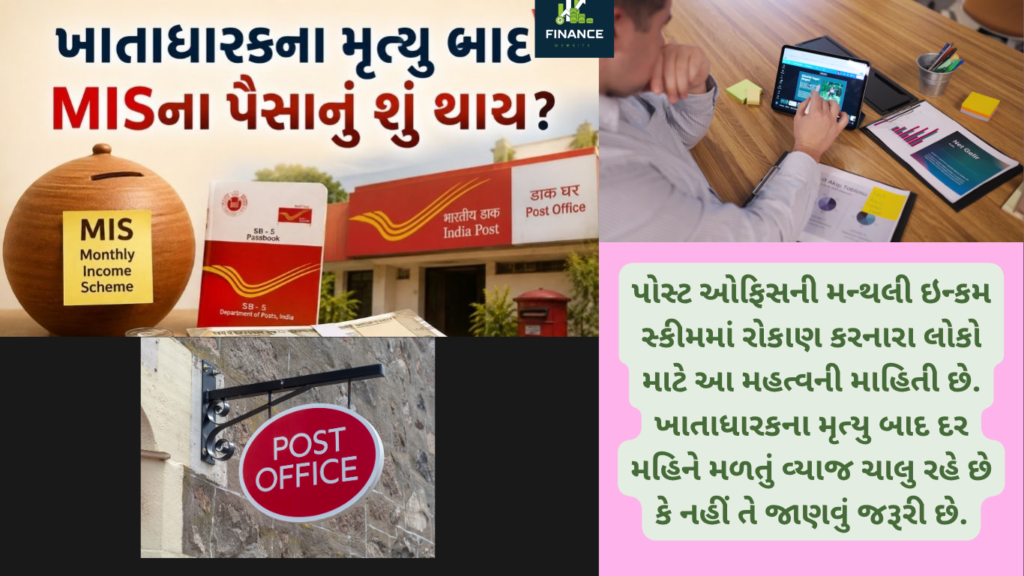
પોસ્ટ ઓફિસની મન્થલી ઇન્કમ સ્કીમમાં રોકાણ કરનારા લોકો માટે આ મહત્વની માહિતી છે. ખાતાધારકના મૃત્યુ બાદ દર મહિને મળતું વ્યાજ ચાલુ રહે છે કે નહીં તે જાણવું જરૂરી છે.
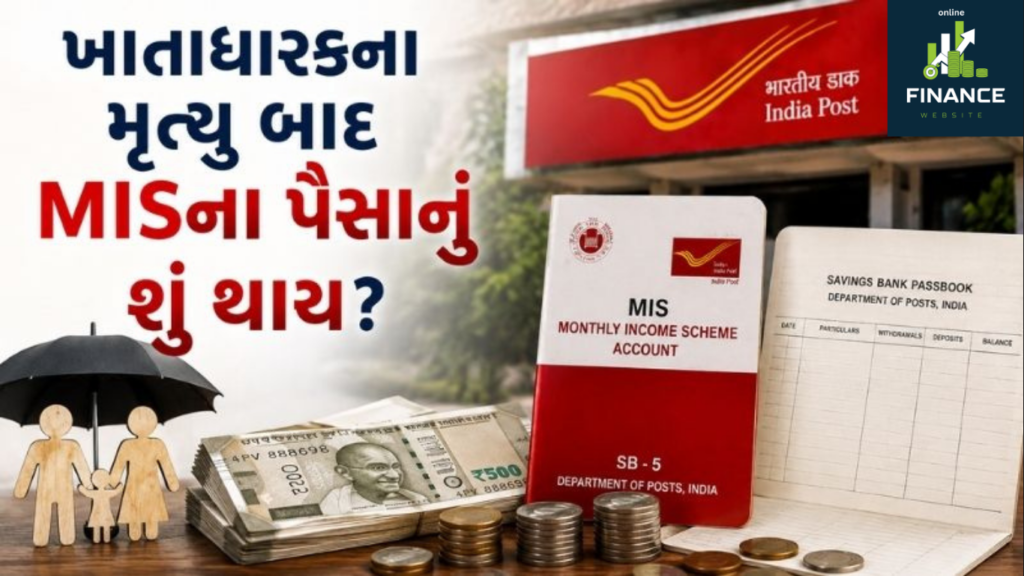
1. ખાતાધારકના મૃત્યુ બાદ MISના પૈસાનું શું થાય?
ઘણા લોકો એવી જગ્યાએ રોકાણ કરવાનું પસંદ કરે છે જ્યાંથી દર મહિને નક્કી આવક મળતી રહે. પોસ્ટ ઓફિસની મન્થલી ઇન્કમ સ્કીમ એટલે કે MIS પણ આવા રોકાણકારોમાં લોકપ્રિય છે. આ સ્કીમમાં એકસાથે રકમ જમા કરીને તેના પર દર મહિને વ્યાજ મેળવી શકાય છે. પરંતુ રોકાણ કરતા પહેલા સ્કીમના નિયમો સમજવા પણ એટલા જ જરૂરી છે. ખાસ કરીને ખાતાધારકના મૃત્યુ બાદ જમા રકમ અને મળતા વ્યાજનું શું થાય છે તે અંગે ઘણા લોકોમાં મૂંઝવણ હોય છે. શું ખાતાધારકના મૃત્યુ પછી પરિવારને દર મહિને વ્યાજ મળતું રહે છે? નૉમિની ન હોય તો પૈસા કોને મળે છે? 5 વર્ષ પૂર્ણ થયા બાદ રકમનું શું થાય છે? ચાલો જાણીએ પોસ્ટ ઓફિસ MIS સાથે જોડાયેલી આ મહત્વની વિગતો.
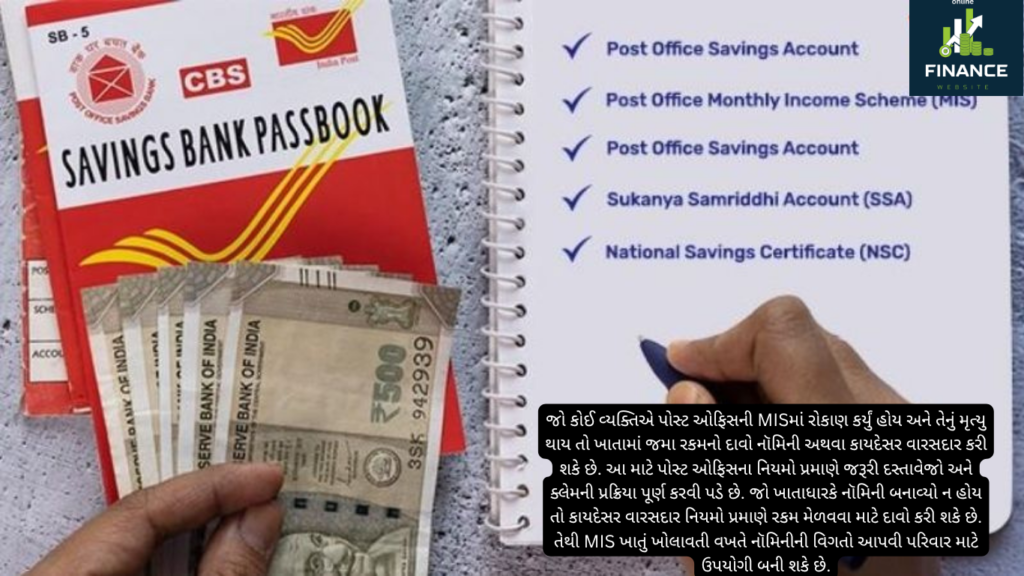
જો કોઈ વ્યક્તિએ પોસ્ટ ઓફિસની MISમાં રોકાણ કર્યું હોય અને તેનું મૃત્યુ થાય તો ખાતામાં જમા રકમનો દાવો નૉમિની અથવા કાયદેસર વારસદાર કરી શકે છે. આ માટે પોસ્ટ ઓફિસના નિયમો પ્રમાણે જરૂરી દસ્તાવેજો અને ક્લેમની પ્રક્રિયા પૂર્ણ કરવી પડે છે. જો ખાતાધારકે નૉમિની બનાવ્યો ન હોય તો કાયદેસર વારસદાર નિયમો પ્રમાણે રકમ મેળવવા માટે દાવો કરી શકે છે. તેથી MIS ખાતું ખોલાવતી વખતે નૉમિનીની વિગતો આપવી પરિવાર માટે ઉપયોગી બની શકે છે.
શું ખાતાધારકના મૃત્યુ પછી દર મહિને વ્યાજ મળતું રહેશે?
MISમાં રોકાણ કરનારને સામાન્ય સ્થિતિમાં દર મહિને વ્યાજ ચૂકવવામાં આવે છે. જોકે ખાતાધારકના મૃત્યુ બાદ આ જ રીતે દર મહિને વ્યાજ મળતું ચાલુ રહેતું નથી. ખાતાધારકના મૃત્યુ બાદ ખાતાની રકમ અને લાગુ પડતી ચુકવણી પોસ્ટ ઓફિસના નિયમો મુજબ નૉમિની અથવા કાયદેસર વારસદારને આપવામાં આવે છે. એટલે માત્ર નૉમિનીનું નામ હોવાના કારણે મૃત ખાતાધારકની જેમ દર મહિને વ્યાજ મળતું રહેશે એવું માનવું યોગ્ય નથી.
પોસ્ટ ઓફિસની મન્થલી ઇન્કમ સ્કીમમાં વ્યક્તિગત ખાતામાં મહત્તમ ₹9 લાખ સુધી રોકાણ કરી શકાય છે. આ રકમ પર હાલમાં 7.4 ટકા વાર્ષિક વ્યાજનો દર લાગુ પડે છે અને વ્યાજની ચુકવણી દર મહિને કરવામાં આવે છે. આ કારણે એવા લોકો માટે આ સ્કીમ ઉપયોગી બની શકે છે જેઓ એકસાથે રકમ રોકીને નિયમિત માસિક આવક મેળવવા માંગે છે.
પોસ્ટ ઓફિસ MISની મુદત 5 વર્ષની હોય છે. એટલે ખાતું ખોલ્યાની તારીખથી 5 વર્ષ પૂર્ણ થયા બાદ સ્કીમ મેચ્યોર થાય છે. મેચ્યોરિટી બાદ નિયમિત વ્યાજની ચુકવણી બંધ થઈ જાય છે અને ખાતાધારક નિયમ મુજબ મેચ્યોરિટી રકમ મેળવી શકે છે. જો રોકાણકારને આગળ પણ માસિક આવકની જરૂર હોય તો લાગુ નિયમો અને તે સમયના વ્યાજદર મુજબ નવી MISમાં ફરી રોકાણ કરવાનો વિકલ્પ જોઈ શકાય છે.
MISની મુદત પૂર્ણ થયા બાદ ખાતાધારકને જમા કરેલી મૂળ રકમ પાછી મળે છે. મેચ્યોરિટી પછી જૂના ખાતા પર વ્યાજ મળતું રહેતું નથી. જો રોકાણકાર ફરીથી માસિક આવક મેળવવા માંગે તો જૂની મેચ્યોરિટી રકમમાંથી નિયમો અનુસાર નવું MIS ખાતું ખોલી શકે છે. જોકે નવું ખાતું ખોલતી વખતે તે સમયની રોકાણ મર્યાદા અને વ્યાજદર લાગુ પડશે.આ રીતે પોસ્ટ ઓફિસ MISમાં રોકાણ કરનારા લોકો માટે માત્ર વ્યાજદર જાણવો પૂરતો નથી. ખાતાધારકના મૃત્યુ બાદ નૉમિની અથવા કાયદેસર વારસદારને રકમ કેવી રીતે મળશે અને મેચ્યોરિટી બાદ શું થશે તે જાણવું પણ જરૂરી છે. રોકાણ કરતા પહેલા પોસ્ટ ઓફિસના તે સમયના લાગુ નિયમો અને વ્યાજદરની ચકાસણી કરવી હંમેશા યોગ્ય છે.
સપ્ટેમ્બરની આ 6 તારીખ નોટ કરે કર્મચારી-પેન્શનર્સ, પગાર-પેન્શન પર મળશે ગુડ ન્યૂઝ
8મા પગાર પંચ હેઠળ કેન્દ્ર સરકારના કર્મચારીઓ માટે વધુ એક મોટી ખુશખબર સામે આવી છે. કર્મચારી સંગઠનોએ HRAમાં મોટા વધારાની માંગ કરી છે. આ વધારાથી લેવલ-5ના કર્મચારીઓને મોટો ફાયદો મળી શકે છે.
8મા પગાર પંચમાં HRA વધારાની કેન્દ્રીય કર્મચારીઓ રાહ જોઈ રહ્યા.
X-કેટેગરી શહેરોમાં HRA 40% થવાની સંભાવના છે.
લેવલ-5 કર્મચારીઓને ₹15,800 સુધી HRA મળવાની અપેક્ષા.
HRA ઘરભાડા ખર્ચની ભરપાઈ કરતું ભથ્થું છે.
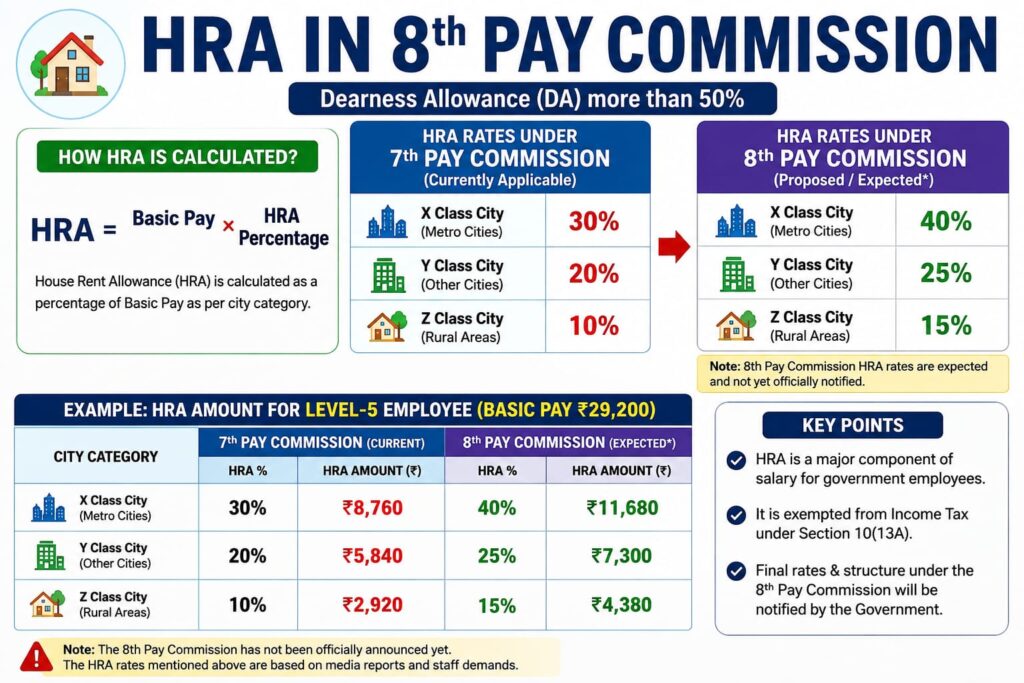
8મા પગાર પંચ હેઠળ હાઉસ રેન્ટ અલાઉન્સ (HRA)માં વધારાની આતુરતાથી રાહ જોઈ રહેલા કેન્દ્ર સરકારના કર્મચારીઓ માટે મોટા સમાચાર સામે આવી રહ્યા છે. કર્મચારીઓ દ્વારા નવા ફિટમેન્ટ ફેક્ટર અને X કેટેગરીના શહેરો માટે HRAને 30%થી વધારીને 40% કરવાની દરખાસ્ત કરવામાં આવી છે. આવી સ્થિતિમાં એવી અપેક્ષા રાખવામાં આવી રહી છે કે 8મો પગાર પંચ લાગુ થયા બાદ લેવલ-5ના કર્મચારીઓને દર મહિને ₹15,768 (લગભગ ₹15,800) સુધીનું બમ્પર HRA મળી શકે છે.
HRA એટલે કે House Rent Allowance, પગારનો એક ભાગ છે, જે કર્મચારીઓને તેમના રહેઠાણ અથવા મકાનના ભાડાનો ખર્ચ પૂરો કરવામાં મદદ માટે આપવામાં આવે છે. જો તમે ભાડાના મકાનમાં રહેતા હોવ તો HRA તમારા ખિસ્સા પરનો ખર્ચ ઘટાડવાની સાથે આવકવેરામાં પણ મોટી છૂટ અપાવી શકે છે.
જો તમે ઓલ્ડ ટેક્સ રેજિમ પસંદ કરો છો, તો આવકવેરા અધિનિયમની કલમ 10(13A) હેઠળ HRA પર ટેક્સ છૂટનો દાવો કરી શકો છો
7મા પગાર પંચમાં કેટલું HRA મળી રહ્યું છે?
7મા પગાર પંચ હેઠળ લેવલ-5ના કર્મચારીનો શરૂઆતનો મૂળ પગાર ₹29,200 છે. તેના 30%ના દરે હાલમાં દર મહિને ₹8,760 HRA મળે છે.
સરકારી નિયમો અનુસાર, જ્યારે મોંઘવારી ભથ્થું (DA) 50%થી વધુ થઈ જાય છે ત્યારે X કેટેગરીના શહેરો માટે HRAનો દર વધીને 30% થઈ જાય છે. હાલમાં DA 50%થી વધુ હોવાથી લેવલ-5ના કર્મચારીઓને તેમના ₹29,200ના મૂળ પગારના 30%, એટલે કે દર મહિને ₹8,760 HRA તરીકે મળે છે.
હવે કર્મચારી સંગઠનો નવા પગાર પંચમાં આ મૂળ પગાર ₹29,200થી વધારીને લગભગ ₹61,320 કરવાની માંગ કરી રહ્યા છે. સાથે જ HRAનો દર 30%થી વધારીને 40% કરવાની પણ માંગ છે. જો આ માંગ મંજૂર થાય તો HRA ₹8,760થી વધીને ₹24,528 થઈ શકે છે.
સપ્ટેમ્બરની આ 6 તારીખ નોટ કરે કર્મચારી-પેન્શનર્સ, પગાર-પેન્શન પર મળશે ગુડ ન્યૂઝ
સરકાર અને મોટાભાગની ખાનગી કંપનીઓ શહેરોને ત્રણ કેટેગરીમાં વહેંચીને HRA નક્કી કરે છે.
X કેટેગરી (મહાનગરો): દિલ્હી, મુંબઈ, બેંગલુરુ જેવા શહેરોમાં રહેવાનો ખર્ચ સૌથી વધુ હોવાથી અહીં મૂળ પગારની સૌથી વધુ ટકાવારી HRA તરીકે મળે છે. હાલમાં સરકારી નિયમો મુજબ આ દર 30% છે.
Y કેટેગરી (ટિયર-2 શહેરો): લખનઉ, જયપુર, પટના જેવા શહેરોમાં રહેવાનો ખર્ચ મધ્યમ હોવાથી અહીં મૂળ પગારના 20% જેટલું HRA મળે છે.
Z કેટેગરી (નાના શહેરો અથવા ગ્રામ્ય વિસ્તારો): અહીં રહેવાનો ખર્ચ ઓછો હોવાથી સૌથી ઓછું HRA મળે છે, જે મૂળ પગારના 10% જેટલું હોય છે.
Frequently Asked Questions
HRA શું હોય છે? HRA એ પગારનો એક ભાગ છે, જે કર્મચારીઓને તેમના રહેઠાણ અથવા મકાનના ભાડાનો ખર્ચ પૂરો કરવામાં મદદ માટે આપવામાં આવે છે. જો તમે ભાડાના મકાનમાં રહેતા હોવ તો HRA આવકવેરામાં પણ મોટી છૂટ અપાવી શકે છે.
1️⃣ HRAની ગણતરી કેવી રીતે થાય છે?
HRA = Basic Pay × HRA ટકાવારી
હાલના 7મા પગાર પંચ હેઠળ DA 50%થી ઉપર હોવાથી HRA દર:
🏙️ X Class City: 30%
🏢 Y Class City: 20%
🏠 Z Class City: 10%
2️⃣ 8મા પગાર પંચ હેઠળ HRAમાં શું ફેરફાર સૂચવાયો છે?
હજુ 8મા પગાર પંચે HRAના નવા દર સત્તાવાર રીતે જાહેર કર્યા નથી. તેથી 24%/16%/8% અથવા 40% જેવા આંકડા હાલમાં અંદાજ/માગ/પ્રસ્તાવ તરીકે જ લેવા જોઈએ, અંતિમ નિયમ તરીકે નહીં. તાજેતરના અહેવાલોમાં અલગ-અલગ સંભવિત દરોની ચર્ચા થઈ રહી છે.
3️⃣ Level-5 કર્મચારીને હાલમાં કેટલું HRA મળે?
7મા CPCમાં Level-5ની શરૂઆતની Basic Pay ₹29,200 છે.
જો ₹29,200 Basic Pay માનીએ તો:
શહેર
HRA
માસિક HRA
🏙️ X City
30%
₹8,760
🏢 Y City
20%
₹5,840
🏠 Z City
10%
₹2,920
અર્થાત્ Level-5માં HRA કર્મચારીના Basic Pay અને શહેરની કેટેગરી પ્રમાણે બદલાય છે.
નોંધ: 8મા પગાર પંચ માટે HRAના અંતિમ દર અને ફિટમેન્ટ ફેક્ટર અંગે સત્તાવાર નિર્ણય આવ્યા બાદ જ ચોક્કસ નવી રકમ કહી શકાય.
8મા પગાર પંચની ટીમ હવે ચેન્નાઈમાં તેની આગામી બેઠક યોજવા માટે તૈયાર છે. અમુક શહેરોમાં તેની બેઠક થશે, ત્યારબાદ સરકારને ફાઇનલ રિપોર્ટ સોંપવામાં આવશે. તે પછી, કર્મચારીઓ કેબિનેટની મંજૂરીની રાહ જોશે, અને ત્યારબાદ સમગ્ર દેશમાં 8મું પગાર પંચ લાગુ કરવામાં આવશે
1. કર્મચારીઓ અને પેન્શનરોને એરિયર્સ ચૂકવવામાં આવશે
આઠમું પગાર પંચ વાસ્તવમાં ગમે ત્યારે લાગુ કરવામાં આવે, પરંતુ તેને જાન્યુઆરી 2026થી અમલી માનવામાં આવશે. એક્સપર્ટનું કહેવું છે કે, જાન્યુઆરી 2026થી ગણતરી કરીને 1 કરોડથી વધુ કેન્દ્ર સરકારના કર્મચારીઓ અને પેન્શનરોને એરિયર્સ એકસાથે ચૂકવવામાં આવશે. આવો, જાણીએ કે આ બાકી રકમ કેટલી હોઈ શકે છે…
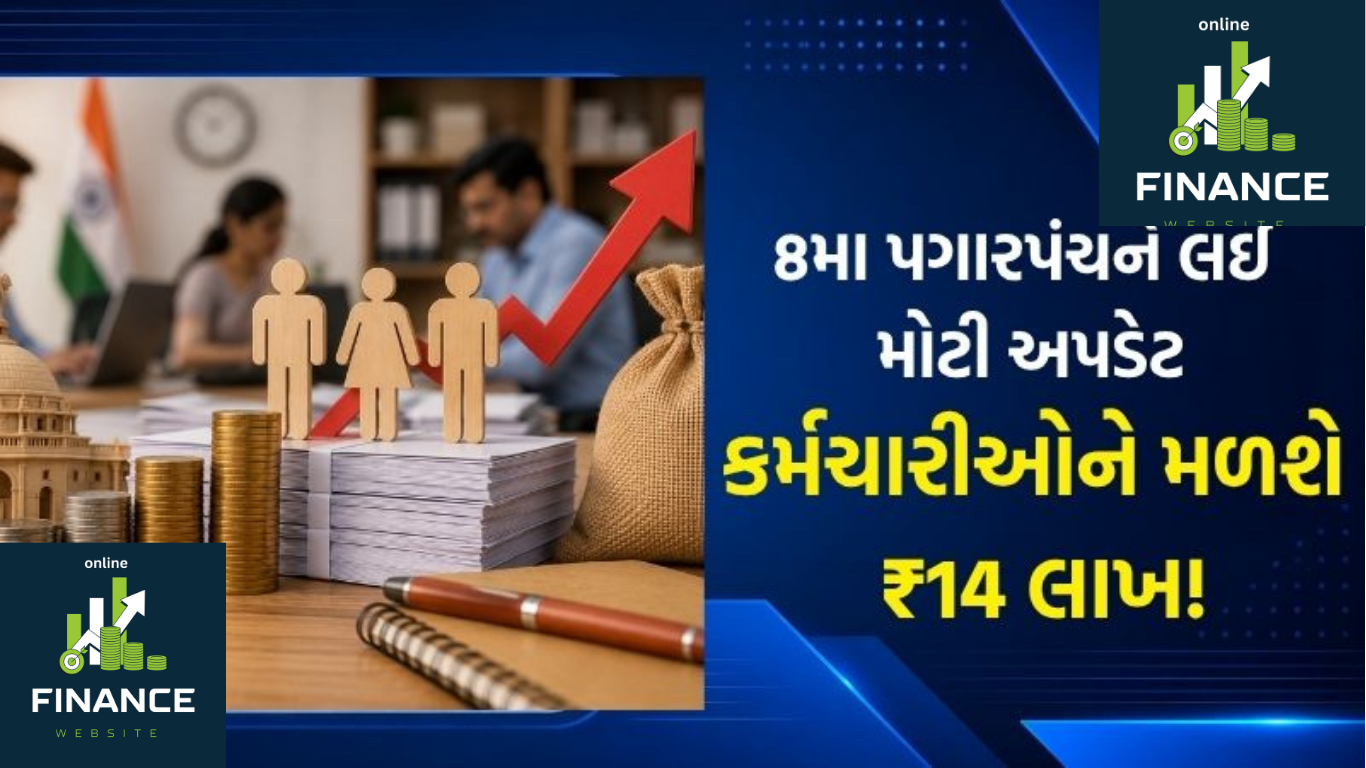
એક ગણતરી મુજબ, જો 8મા પગાર પંચના લાગુ થવામાં 20 મહિનાનો વિલંબ થાય, તો લેવલ 7ના કર્મચારીઓને તે સમયગાળાના બાકી એરિયર્સ પેટે 14 લાખ રુપિયાથી વધુની એકમ રકમ મળી શકે છે. હવે, આપણે લેવલ 4 થી 7 સુધીના કર્મચારીઓને મળવાપાત્ર બાકી ભથ્થાં પર નજર કરીએ.પગાર પંચના અમલીકરણમાં જેટલો વધુ વિલંબ થશે, બાકી નીકળતી રકમ તેટલી જ વધતી જશે. સૂત્રો અને એક્સપર્ટના અંદાજ મુજબ, 8મા પગાર પંચની ભલામણોનો સંપૂર્ણ અમલ થવામાં લગભગ 20 મહિના કે તેથી વધુ સમય લાગી શકે છે.
. કેટલુ ફિટમેન્ટ ફેક્ટર?
જો બેઝિક સેલેરીની ગણતરી 2.57ના ફિટમેન્ટ ફેક્ટરના આધારે કરવામાં આવે, તો માસિક પગાર વધુ હશે અને કર્મચારીઓને તે મુજબ એરિયર્સ ચૂકવવામાં આવશે. આ બાકી રકમ કર્મચારીઓ અને પેન્શનરો બંનેને એકસાથે ચૂકવી શકાય છે.
સપ્ટેમ્બરની આ 6 તારીખ નોટ કરે કર્મચારી-પેન્શનર્સ, પગાર-પેન્શન પર મળશે ગુડ ન્યૂઝ
જો 7મા પગાર પંચ હેઠળ અંદાજિત મૂળ પગાર 44,900 રુપિયા માનવામાં આવે, તો 2.57ના ફિટમેન્ટ ફેક્ટરનો ઉપયોગ કરવાથી 8મા પગાર પંચ હેઠળ અંદાજિત મૂળ પગાર 1,15,393 રુપિયા થશે. આ સ્થિતિમાં, માસિક એરિયર્સ 70,493 રુપિયા થશે. 20 મહિનાના કુલ એરિયર્સની ગણતરી કરતા તો 70,493 × 20 = 14,09,860 રુપિયા અથવા 14.10 લાખ રુપિયાની રકમ મળે છે.
લેવલ 6થી 4 સુધીના કર્મચારીઓને કેટલુ મળશે એરિયર
આ ગણતરીના આધારે 20 મહિના પછી લેવલ-6 ના કર્મચારીઓ માટે બાકી રકમ 11.11 લાખ રુપિયા, લેવલ-5 ના કર્મચારીઓ માટે 9.13 લાખ રુપિયા અને લેવલ-4 ના કર્મચારીઓ માટે 8 લાખ રુપિયા થશે.
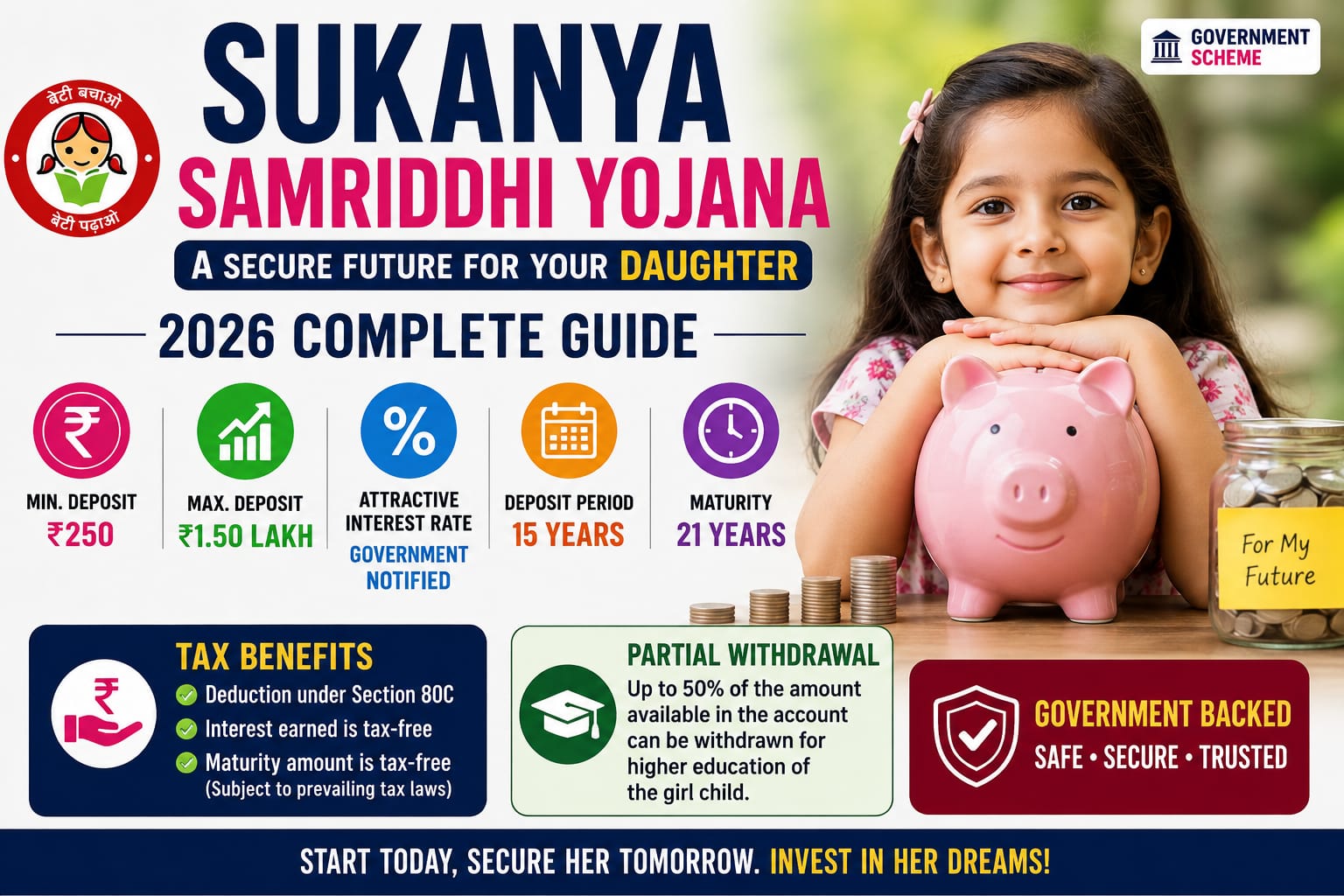
Sukanya Samriddhi Yojana (SSY) is a government-backed small savings scheme designed to help parents and guardians build a secure financial fund for the education and future of a girl child. The scheme encourages long-term savings by offering an attractive interest rate, tax benefits and government-backed security.
In this detailed guide, you will learn about Sukanya Samriddhi Yojana 2026 eligibility, minimum and maximum deposit, interest rate, maturity period, withdrawal rules, tax benefits and important rules.
Sukanya Samriddhi Yojana is a savings scheme introduced under the Government of India’s Beti Bachao, Beti Padhao initiative. It is specifically designed for the financial future of a girl child.
Parents or legal guardians can open an SSY account in the name of an eligible girl child and make deposits for a specified period. The accumulated amount, along with interest, can help meet major future expenses such as higher education and marriage.
Sukanya Samriddhi Yojana 2026 – Key Highlights
Feature
Details
Scheme Name
Sukanya Samriddhi Account
Target Beneficiary
Girl Child
Account Opening Age
Below 10 years
Minimum Deposit|
₹250 per financial year
Maximum Deposit
₹1.50 lakh per financial year
Deposit Period
15 years from account opening
Maturity
21 years from account opening
Interest
Government-notified rate
Tax Benefit
Eligible under applicable tax provisions
Account Type
Small Savings Scheme
સપ્ટેમ્બરની આ 6 તારીખ નોટ કરે કર્મચારી-પેન્શનર્સ, પગાર-પેન્શન પર મળશે ગુડ ન્યૂઝ
Who Can Open an SSY Account?
The account can generally be opened by a parent or legal guardian on behalf of a girl child who has not completed 10 years of age at the time of account opening.
Normally, only one account can be opened in the name of a girl child. The scheme also provides specific provisions for families having more than one girl child in certain circumstances.
Sukanya Samriddhi Yojana Minimum and Maximum Deposit
A minimum contribution of ₹250 per financial year is required to keep the account active.
The maximum amount that can be deposited in an SSY account in a financial year is ₹1.50 lakh.
Deposits can be made according to the applicable rules through permitted modes such as cash, cheque, demand draft or electronic means at authorised institutions.
The interest rate on Sukanya Samriddhi Account is not permanently fixed. It is notified by the Government from time to time and may change periodically.
Therefore, before making a financial decision, account holders should verify the latest officially notified SSY interest rate.
Interest is compounded annually as per the scheme rules.
How Long Do You Need to Deposit Money?
One important feature of SSY is that deposits are required for 15 years from the date of opening the account.
However, the account generally continues until 21 years from the date of opening, subject to the scheme’s rules.
This means parents can contribute for the initial 15-year period while the account continues to earn interest according to the applicable rules.
Sukanya Samriddhi Yojana Maturity
The SSY account normally matures after 21 years from the date of opening.
At maturity, the account holder can receive the amount accumulated in the account, subject to the applicable rules.
The long maturity period makes SSY suitable for parents who want to create a long-term financial corpus for their daughter’s future.
Partial Withdrawal for Higher Education
SSY allows withdrawal of up to 50% of the amount available in the account for the purpose of higher education of the girl child, subject to the prescribed conditions.
The withdrawal is permitted after the girl child reaches the eligible age or after she has passed the required educational stage, as specified under the scheme rules.
Relevant documents may be required to establish the requirement for higher education.
Premature Closure of SSY Account
Premature closure is generally restricted and is permitted only under specified circumstances.
The scheme includes provisions relating to circumstances such as the marriage of the account holder after reaching the prescribed age and certain exceptional situations.
Account holders should check the latest official rules before requesting premature closure.
Tax Benefits Under Sukanya Samriddhi Yojana
Sukanya Samriddhi Yojana is widely known for its tax advantages.
Subject to the Income Tax Act and applicable conditions:
Eligible contributions can qualify for deduction under Section 80C.
Interest earned under the scheme is generally treated as tax-exempt under the applicable provisions.
The amount received at maturity is also generally exempt, subject to prevailing tax rules.
Tax laws can change, so taxpayers should verify the current provisions for the relevant financial year.
SSY Example: ₹1,500 Monthly Saving
Suppose a parent deposits ₹1,500 every month.
Annual contribution:
₹1,500 × 12 = ₹18,000
If the parent continues contributing regularly for the permitted contribution period, a substantial long-term corpus can be created because the deposits earn compound interest.
The final maturity amount depends on the applicable government-notified interest rates and the timing of deposits.
Therefore, an exact maturity calculation should always be made using the current SSY interest rate and official scheme rules.
Documents Required for Sukanya Samriddhi Account
Generally, the following documents may be required:
Girl child’s birth certificate
Parent/guardian identity proof
Parent/guardian address proof
Passport-size photographs
Account opening form
Other documents required by the authorised bank or post office
The exact documentation requirements may vary according to the institution.
Where Can You Open an SSY Account?
An SSY account can be opened through eligible banks and post offices authorised to offer the scheme.
Parents should visit the concerned bank branch or post office and complete the account-opening process using the prescribed form and documents.
Before opening or contributing to an SSY account, remember these important points:
The girl child must satisfy the prescribed age condition at the time of account opening.
The minimum annual deposit requirement must be maintained.
Total deposits cannot exceed ₹1.50 lakh in a financial year.
Deposits are required for 15 years from account opening.
The account normally matures after 21 years.
Partial withdrawal is subject to prescribed conditions.
Interest rates can change according to government notifications.
Keep the account and KYC details updated.
Benefits of Sukanya Samriddhi Yojana
Government-Backed Savings
SSY is a government-backed small savings scheme, making it an attractive option for conservative long-term savers.
Long-Term Wealth Creation
The combination of regular contributions and compound interest can help create a sizeable corpus over the long term.
Tax Advantages
The scheme provides significant tax benefits under applicable tax provisions.
Focus on Girl Child
The scheme is specifically designed to support the financial needs and future goals of a girl child.
Flexible Contribution
Parents can contribute different amounts during the deposit period, subject to the minimum and maximum limits.
Sukanya Samriddhi Yojana vs Other Savings Options
SSY is particularly suitable for parents looking for a long-term, government-backed savings option for a girl child.
However, it should be compared with other financial products based on factors such as:
Investment horizon
Liquidity requirements
Risk tolerance
Tax treatment
Expected returns
Financial goals
No single financial product is suitable for everyone.
Frequently Asked Questions? – SSY 2026
Is Sukanya Samriddhi Yojana a government scheme?
Yes. Sukanya Samriddhi Account is a government-backed small savings scheme for the benefit of a girl child.
What is the maximum annual deposit in SSY?
The maximum permissible deposit is ₹1.50 lakh in a financial year.
What is the minimum annual deposit?
The minimum annual deposit is ₹250.
How many years do I have to deposit money?
Deposits are generally required for 15 years from the date of account opening.
When does the SSY account mature?
The account normally matures 21 years from the date of opening.
Can money be withdrawn before maturity?
Yes, but withdrawals are permitted only under specified conditions, including eligible higher-education requirements.
Can an SSY account be transferred?
An SSY account can be transferred between eligible post offices and authorised banks according to the applicable rules.
Final Words
Sukanya Samriddhi Yojana 2026 can be a useful long-term savings option for parents who want to build a financial corpus for their daughter’s future. Its government-backed structure, long investment horizon, compound interest and tax benefits make it an important scheme to consider for eligible families.
Before investing, always check the latest interest rate, government notifications and applicable tax rules, because scheme conditions and rates may change over time.🔎 SEO Pack
Sukanya Samriddhi Yojana: Invest just ₹1,500 regularly and build a substantial maturity corpus for your daughter. Know the 15-year deposit rule, 6-year interest benefit, compound interest and maturity calculation.
15 વર્ષના નિયમિત રોકાણ પછી વધારાના 6 વર્ષ સુધી વ્યાજનો ઉત્તમ લાભ ચક્રવૃદ્ધિ વ્યાજની અસરે નાની બચત બનશે મોટો આધાર.
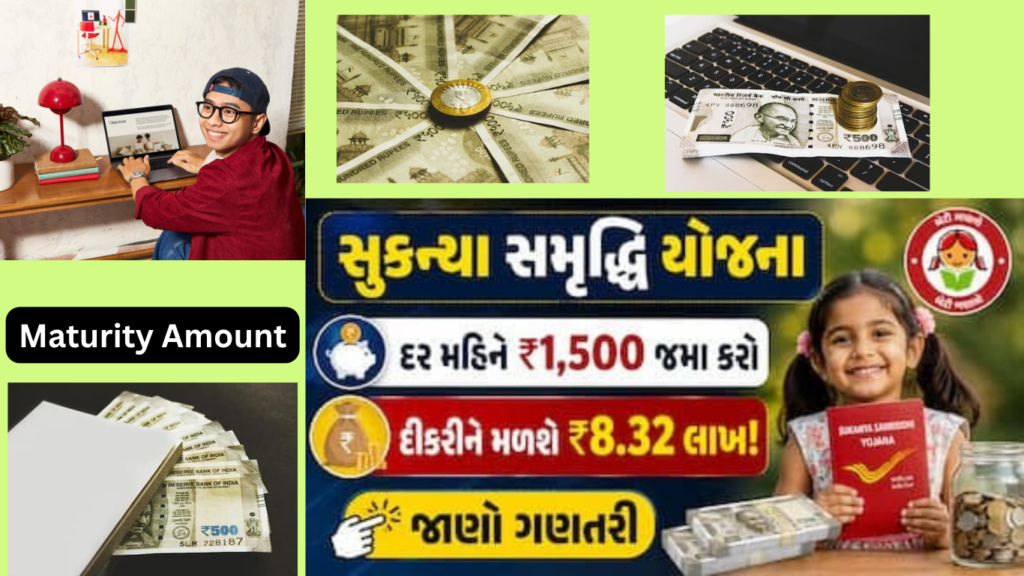
પોતાની વહાલી દીકરીના ભવિષ્યને આર્થિક રીતે સુરક્ષિત કરવા માટે કેન્દ્ર સરકાર સંચાલિત સુકન્યા સમૃદ્ધિ યોજના (SSY) હાલના સમયમાં માતાપિતા માટે સૌથી લોકપ્રિય અને ભરોસાપાત્ર માધ્યમ બની રહી છે. જો તમે શરૂઆતથી જ નાની રકમનું સાતત્યપૂર્ણ આયોજન કરો, તો દીકરીના ઉચ્ચ શિક્ષણ તેમજ લગ્ન જેવા મહત્વના પ્રસંગો માટે લાંબાગાળે એક નોંધપાત્ર ભંડોળ આસાનીથી એકત્ર થઈ શકે છે. જો કોઈ પરિવાર દર મહિને સામાન્ય ગણાતી ₹1,500 જેવી રકમનું નિયમિત રોકાણ આ યોજનામાં કરે, તો પાકતી મુદતે તેમાંથી લાખો રૂપિયાનું મોટું ભંડોળ તૈયાર થઈ શકે છે.
સુકન્યા સમૃદ્ધિ યોજનાના નિયમ અનુસાર ખાતાધારકે માત્ર 15 વર્ષ સુધી જ નાણાં જમા કરાવવાના હોય છે, જ્યારે ખાતાની કુલ પાકતી મુદત 21 વર્ષની રહે છે. દર મહિને ₹1,500 નું રોકાણ કરવાનો અર્થ એ થાય કે વાર્ષિક ધોરણે ₹18,000 (₹1,500 × 12) જમા થાય છે. આ રીતે સતત 15 વર્ષ સુધી રોકાણ ચાલુ રાખવામાં આવે તો વાલીના ખિસ્સામાંથી 15 વર્ષમાં કુલ ₹2,70,000 (₹18,000 × 15) એટલે કે ₹2.70 લાખની મૂળ રકમ જમા થાય છે.
સપ્ટેમ્બરની આ 6 તારીખ નોટ કરે કર્મચારી-પેન્શનર્સ, પગાર-પેન્શન પર મળશે ગુડ ન્યૂઝ
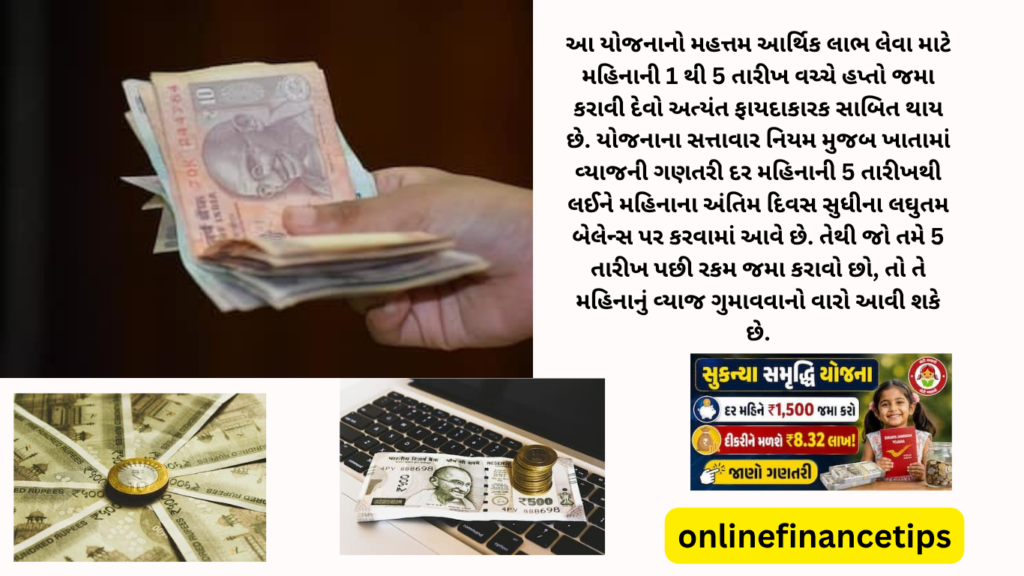
આ સ્કીમની સૌથી મોટી વિશેષતા એ છે કે 15 વર્ષ પૂર્ણ થયા બાદ આગામી 6 વર્ષ સુધી વાલીએ એક પણ રૂપિયો ભરવાનો રહેતો નથી. તેમ છતાં, ખાતામાં જમા થયેલી સમગ્ર રકમ પર સરકાર દ્વારા નિર્ધારિત ચક્રવૃદ્ધિ વ્યાજ સતત જમા થતું રહે છે. જો હાલના વાર્ષિક 8.2% ના વ્યાજદરને આધાર ગણીએ, તો 21 વર્ષની પાકતી મુદતે કુલ ₹8.32 લાખ જેટલી માતબર રકમ પ્રાપ્ત થઈ શકે છે. જેમાં ₹2.70 લાખનું મૂળ રોકાણ અને અંદાજે ₹5.62 લાખ જેટલું માત્ર વ્યાજ એકઠું થાય છે, એટલે કે રોકાણ કરતાં વ્યાજની આવક બમણાથી પણ વધુ થઈ જાય છે.
ચક્રવૃદ્ધિ વ્યાજના પ્રભાવથી રોકાણ સમય સાથે ઝડપથી વધે છે, જેમાં 5 વર્ષના અંતે ભંડોળ ₹1.11 લાખ, 10 વર્ષના અંતે ₹2.75 લાખ અને 15 વર્ષના અંતે ₹5.18 લાખ સુધી પહોંચી જાય છે. ત્યારપછીના રોકાણ વિનાના સમયગાળામાં રકમ ઝડપથી વધતાં 16 વર્ષે ₹5.61 લાખ, 17 વર્ષે ₹6.07 લાખ અને 18 વર્ષના અંતે ₹6.57 લાખ થાય છે. આ વૃદ્ધિ આગળ વધતાં 19 વર્ષે ₹7.11 લાખ, 20 વર્ષે ₹7.69 લાખ અને આખરે 21 વર્ષની પરિપક્વતા પર કુલ રકમ ₹8.32 લાખ સુધી પહોંચવાનો અંદાજ રહે છે.
આ યોજનાનો મહત્તમ આર્થિક લાભ લેવા માટે મહિનાની 1 થી 5 તારીખ વચ્ચે હપ્તો જમા કરાવી દેવો અત્યંત ફાયદાકારક સાબિત થાય છે. યોજનાના સત્તાવાર નિયમ મુજબ ખાતામાં વ્યાજની ગણતરી દર મહિનાની 5 તારીખથી લઈને મહિનાના અંતિમ દિવસ સુધીના લઘુતમ બેલેન્સ પર કરવામાં આવે છે. તેથી જો તમે 5 તારીખ પછી રકમ જમા કરાવો છો, તો તે મહિનાનું વ્યાજ ગુમાવવાનો વારો આવી શકે છે.
સુકન્યા સમૃદ્ધિ ખાતું 10 વર્ષથી ઓછી વય ધરાવતી કોઈપણ દીકરીના નામે તેના માતાપિતા કે કાયદેસરના વાલી દ્વારા કોઈપણ અધિકૃત પોસ્ટ ઓફિસ અથવા સરકારી બેંકમાં સરળતાથી ખોલાવી શકાય છે. એક દીકરીના નામે માત્ર 1 ખાતું ખોલી શકાય છે અને નિયમ મુજબ એક પરિવારમાં મહત્તમ 2 દીકરીઓ માટે આ લાભ ઉપલબ્ધ બને છે.
સુકન્યા સમૃદ્ધિ ખાતું 10 વર્ષથી ઓછી વય ધરાવતી કોઈપણ દીકરીના નામે તેના માતાપિતા કે કાયદેસરના વાલી દ્વારા કોઈપણ અધિકૃત પોસ્ટ ઓફિસ અથવા સરકારી બેંકમાં સરળતાથી ખોલાવી શકાય છે. એક દીકરીના નામે માત્ર 1 ખાતું ખોલી શકાય છે અને નિયમ મુજબ એક પરિવારમાં મહત્તમ 2 દીકરીઓ માટે આ લાભ ઉપલબ્ધ બને છે.
ખાતાને સક્રિય રાખવા માટે કોઈપણ એક નાણાકીય વર્ષ દરમિયાન ન્યૂનતમ ₹250 અને મહત્તમ ₹1.5 લાખ સુધીની થાપણ જમા કરાવી શકાય છે. કેન્દ્ર સરકાર દ્વારા દર 3 મહિને વ્યાજદરોની સમીક્ષા કરવામાં આવતી હોવાથી ભવિષ્યના દર મુજબ આખરી રકમમાં આંશિક ફેરફાર શક્ય છે, છતાં સરકારી ગેરંટી અને કરમુક્તિના લાભો સાથે દીકરીના સુરક્ષિત ભવિષ્ય માટે આ યોજના શ્રેષ્ઠ રોકાણ વિકલ્પ સાબિત થાય છે.
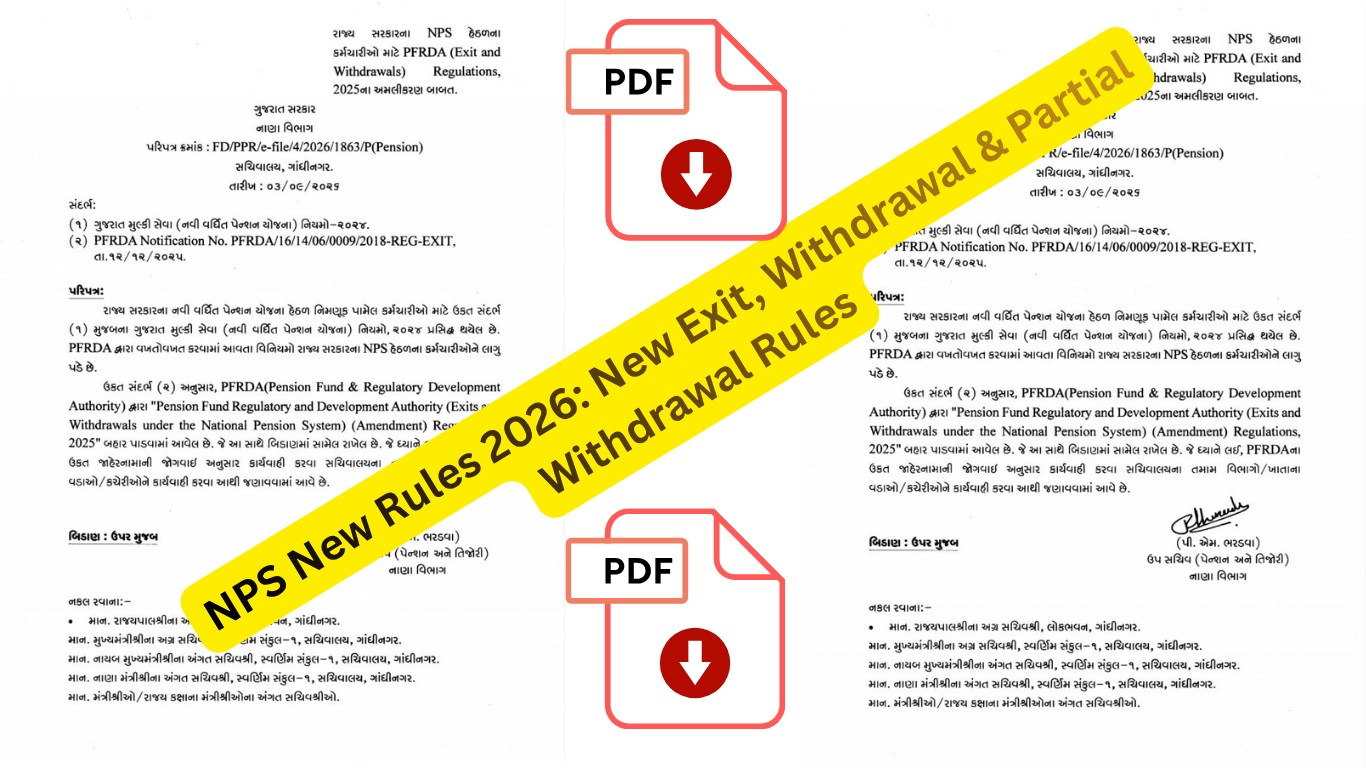
NPS New Rules 2026 explained: Check new exit, withdrawal, annuity, partial withdrawal, ₹8 lakh and ₹12 lakh limits, deferment up to 85 years and key NPS changes.
સપ્ટેમ્બરની આ 6 તારીખ નોટ કરે કર્મચારી-પેન્શનર્સ, પગાર-પેન્શન પર મળશે ગુડ ન્યૂઝ
Introduction
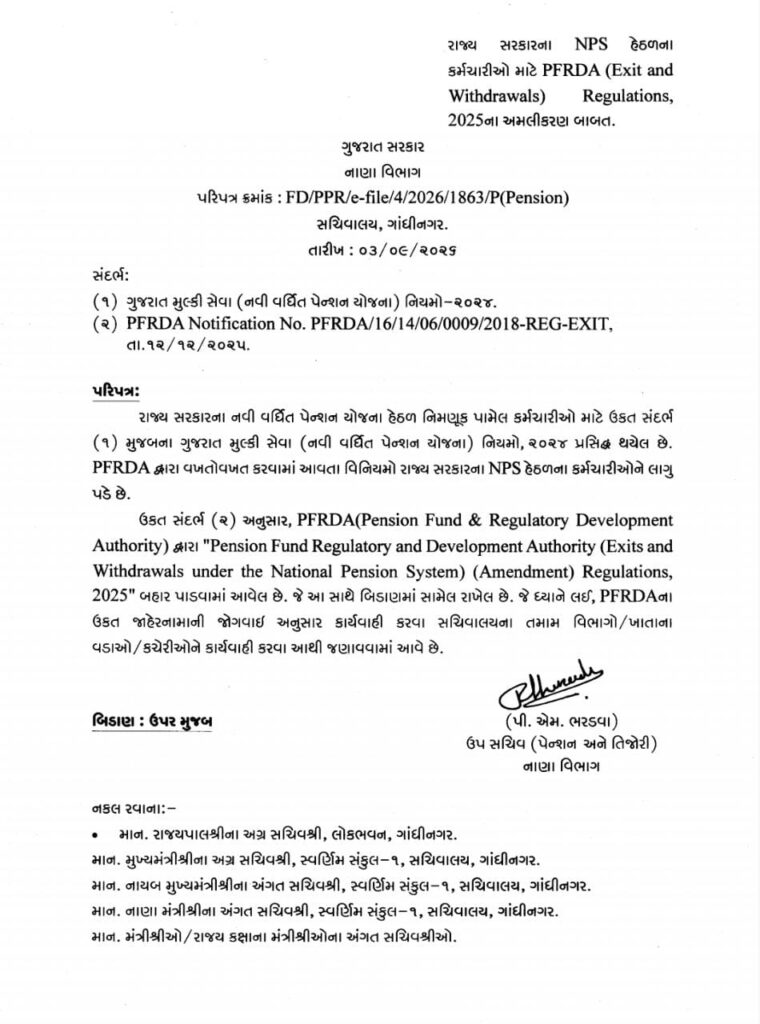
The National Pension System (NPS) has introduced important changes relating to exit, withdrawal, annuity purchase and partial withdrawal. The latest changes are based on the Pension Fund Regulatory and Development Authority (Exits and Withdrawals under the National Pension System) (Amendment) Regulations, 2025, issued by PFRDA.
The amended regulations introduce separate provisions for Government Sector subscribers, Non-Government Sector subscribers and NPS-Lite/Swavalamban subscribers. The rules also provide greater flexibility regarding deferment of annuity purchase and lump-sum withdrawal.
NPS Exit Rules for Government Sector Subscribers
Under the amended provisions, a Government Sector NPS subscriber reaching the applicable retirement or superannuation age can continue in NPS up to the age of 85 years until an exit option is exercised.
At the time of exit, at least 40% of the accumulated pension wealth is generally required to be used for purchasing an annuity, while the remaining amount can be paid as a lump sum or through approved periodic payout options.
Special Rule for Accumulated Pension Wealth up to ₹8 Lakh
If the accumulated pension wealth does not exceed ₹8 lakh, the subscriber has the option to withdraw the entire accumulated pension wealth as a lump sum or through approved periodic payout options.
Where the accumulated pension wealth is more than ₹8 lakh but does not exceed ₹12 lakh, the subscriber can withdraw up to ₹6 lakh as a lump sum or use approved periodic payout options.
The remaining pension wealth can be used for periodic payouts for at least six years, annuity purchase or other options approved by the Authority.
NPS Withdrawal Can Be Deferred Up to 85 Years
One of the important changes is the provision for deferment.
A subscriber may defer the purchase of annuity or withdrawal of the lump-sum amount up to the age of 85 years, by submitting a request to the NPS Trust or an authorised intermediary/entity.
During the deferment period, the subscriber can exercise the exit option at any time.
NPS Rules for Non-Government Sector Subscribers
The amended regulations also provide separate exit provisions for Non-Government Sector subscribers.
A Non-Government Sector subscriber can remain within the NPS system up to the age of 85 years unless an exit option is exercised according to the prescribed conditions.
On retirement, superannuation, completion of the applicable subscription period or attainment of 60 years, at least 20% of accumulated pension wealth is generally required to be used for annuity purchase, while the balance can be received as a lump sum or through approved periodic payout options.
Up to ₹8 Lakh
If the accumulated pension wealth does not exceed ₹8 lakh, the subscriber can withdraw the entire amount as a lump sum or through approved periodic payout options.
More Than ₹8 Lakh and Up to ₹12 Lakh
If the accumulated pension wealth is more than ₹8 lakh but does not exceed ₹12 lakh, the subscriber can withdraw up to ₹6 lakh as a lump sum or through approved periodic payout options.
The remaining amount can be used for periodic payouts for at least six years, annuity purchase or other options approved by PFRDA.
Premature Exit from NPS
The rules also cover voluntary exit before becoming eligible for the normal exit provisions.
For a Non-Government Sector subscriber who voluntarily exits before becoming eligible under the normal retirement/exit provision, at least 80% of accumulated pension wealth is required to be utilised for purchasing an annuity, while the remaining amount can be paid as a lump sum or through approved periodic payout options.
The amended regulations also change provisions relating to partial withdrawal.
A subscriber can make partial withdrawals from the accumulated pension wealth, subject to the prescribed conditions and limits. The amended provision allows partial withdrawal of up to 25% of the subscriber’s own contribution.
For withdrawals before the applicable retirement/superannuation point, a maximum of four withdrawals is permitted, with a minimum gap of four years between successive withdrawals.
After attaining 60 years or after retirement/superannuation, where the subscriber continues in NPS, partial withdrawals can be made subject to a minimum gap of three years, with the withdrawal amount not exceeding 25% of the eligible contribution.
The amended provisions include important purposes for partial withdrawal, including:
Purchase or construction of a residential house or flat in the subscriber’s own name or jointly with a legally married spouse.
Medical treatment or hospitalisation of the subscriber, legally married spouse, children including legally adopted children, or parents.
Settlement of a financial liability taken from a regulated financial institution against a lien or charge on the individual pension account.
NPS Rules in Case of Death
The regulations also specify provisions for settlement of accumulated pension wealth after the death of a subscriber.
In applicable cases, the accumulated pension wealth can be paid to the nominee(s) or legal heir(s), subject to the relevant provisions of the regulations. The rules also provide specific provisions for situations where the subscriber dies before completing deferred annuity purchase or lump-sum withdrawal.
Missing and Presumed Dead Subscriber
A new provision deals with subscribers who are missing and presumed dead.
The nominee(s) or legal heir(s) may receive 20% of accumulated pension wealth as interim relief in lump sum, while the remaining 80% remains invested until the subscriber is legally determined to be missing and presumed dead according to the applicable law.
The regulations prescribe documentation requirements, including a police report/FIR and an indemnity bond for release of the interim relief.
Renunciation of Indian Citizenship
The amended regulations also introduce a specific provision for a subscriber who ceases to be a citizen of India.
Such a subscriber may close the individual pension account and withdraw the entire accumulated pension wealth in lump sum in accordance with the guidelines or circulars issued by PFRDA.
NPS-Lite and Swavalamban Rules
Separate provisions continue for NPS-Lite and Swavalamban subscribers.
Under the schedule, for exit on attaining 60 years, where accumulated pension wealth is up to ₹2 lakh, the subscriber may withdraw the entire amount as a lump sum or follow the applicable annuity option. Where the amount is above ₹2 lakh, up to 60% may be available as lump sum and at least 40% is used for annuity.
For exit before 60 years, the corresponding threshold is ₹2 lakh, with up to 20% available for lump-sum withdrawal and at least 80% for annuity where the accumulated wealth exceeds the threshold.
Key Highlights of NPS New Rules
NPS Provision| Important Change Government Sector Retirement Exit| Generally 40% annuity Government Sector APW up to ₹8 lakh| Entire amount can be withdrawn Government Sector APW ₹8–12 lakh| Up to ₹6 lakh lump sum Non-Government Sector Retirement Exit| Generally 20% annuity Non-Government APW up to ₹8 lakh| Entire amount can be withdrawn Non-Government APW ₹8–12 lakh| Up to ₹6 lakh lump sum Deferment| Up to age 85 Partial Withdrawal| Up to 25% of eligible own contribution Pre-retirement Partial Withdrawal| Maximum four withdrawals, subject to conditions Post-retirement Partial Withdrawal| Minimum three-year gap Missing Subscriber| 20% interim relief, subject to conditions Renunciation of Citizenship| Entire accumulated pension wealth may be withdrawn as prescribed
The revised NPS exit and withdrawal framework introduces significant changes in retirement planning. The provisions provide different withdrawal and annuity requirements for Government and Non-Government Sector subscribers and introduce additional flexibility through deferment up to 85 years.
Subscribers should carefully check their NPS category, accumulated pension wealth, retirement status and applicable conditions before making an exit or withdrawal decision. The detailed provisions, limits and exceptions should be read together with the applicable PFRDA regulations and subsequent guidelines.
Source: Pension Fund Regulatory and Development Authority (PFRDA) — Pension Fund Regulatory and Development Authority (Exits and Withdrawals under the National Pension System) (Amendment) Regulations, 2025. The notification states that the regulations come into force from the date of publication in the Official Gazette.SEO Details